Posts

Showing posts with the label hindu

Goddess Durga in Indian Art: Forms, Symbols & Stories

Image
Goddess Durga holds a central place in Indian art, where religious belief, mythology, and artistic expression come together. She appears in temple sculptures, bronze statues, paintings, manuscripts, and contemporary artwork across different regions of India. Although her appearance changes according to local traditions, Durga is commonly shown as a powerful goddess with multiple arms, divine weapons, and a lion or tiger as her vehicle. Her images often represent the victory of dharma over destructive forces and the protective power of Shakti. 1. Durga as Mahishasuramardini One of the most famous artistic forms of Durga is Mahishasuramardini, the slayer of the buffalo demon Mahishasura. Artists commonly portray her standing or riding upon a lion while attacking the demon. This image became especially important in Indian temple sculpture and represents the triumph of divine power over destructive forces. The Devi Mahatmya provides the textual foundation for this form. 2. Durga’s Multiple...

Mahadeva, Rudra, Shankara: The Many Names of Shiva

Image
Lord Shiva is known by countless names across Hindu scriptures, devotional traditions, and regional cultures. Each name reveals a particular quality, role, or aspect of his divine nature . Rather than being merely different names for the same deity, these titles offer different ways of understanding Shiva as the compassionate lord, fierce cosmic power, supreme yogi, and master of transformation. Mahadeva: The Great God Mahadeva means “the Great God” and expresses Shiva’s supreme status. The name reflects his transcendence beyond ordinary distinctions and his role as a powerful divine presence within the Hindu understanding of the cosmos. Devotees use this name to invoke Shiva as the supreme and all-encompassing Lord . Rudra: The Formidable One Rudra represents one of Shiva’s most ancient and powerful aspects. The name is associated with ideas of fierceness, power, and transformation . In the Vedic tradition, Rudra is a formidable deity connected with storms, healing, wild nature, ...

Where Divine Strength Shapes Endless Abundance

Image
The observances of Parashurama Jayanti and Akshaya Tritiya hold distinct places within the Hindu tradition, each rooted in different dimensions of spiritual thought and practice. Although they occasionally fall on the same day, their meanings, narratives, and ritual emphasis remain independent, reflecting two complementary yet separate paths within the broader framework of dharma. Parashurama Jayanti marks the birth of Parashurama , regarded as the sixth incarnation of Lord Vishnu . His life is primarily associated with the restoration of moral order during a time of imbalance and misuse of power. The narratives connected with Parashurama emphasize discipline, austerity, and the duty to uphold righteousness. His character is often understood as a representation of controlled strength, in which action is guided by strict adherence to dharma. The observance of this day, therefore, is reflective and contemplative, encouraging individuals to consider the ethical dimensions of their act...

eturning the Thirumangai Alvar Bronze: A Temple Treasure Reclaimed

Image
Across South India, temple bronzes were created not merely as art but as living embodiments of devotion. Crafted according to the Shilpa Shastras , these sculptures followed precise proportions, gestures, and iconographic rules, ensuring that each image could serve as a conduit for divine presence. Once installed in a temple, the ritual of prana pratishtha consecrated the bronze, transforming it from a metal object into a sacred medium through which devotees could encounter gods or saintly figures. Over time, these icons became central to the spiritual and cultural life of their communities. A 16th-century bronze of Thirumangai Alvar , long housed at the Ashmolean Museum , has now been repatriated to India. Archival photographs and provenance research traced its origin to the Soundararaja Perumal Temple near Kumbakonam, Tamil Nadu. Acquired by the museum in 1967 through Sotheby’s, the sculpture had been separated from its temple context for decades. The repatriation followed careful ...

The Complete Insider Guide to Buying a Brass Idol

Image
Buying a brass idol is not just shopping; it is inviting sacred presence into your home. Naturally, doubts arise before making that choice. You may wonder whether the brass is pure, whether it will endure years of worship, or what size will suit a compact prayer corner. Questions about abhishekam, maintenance, price differences, and the choice between brass, bronze, or panchaloha often create confusion. Even photographs can be misleading, making it difficult to judge craftsmanship or authenticity. These concerns are thoughtful, not excessive. A brass idol carries cultural depth as well as material value. Understanding what gives brass its durability, warm glow, and ritual suitability can help you decide with clarity. Attention to weight, detailing, finish, and proportion reveals whether a piece is truly handcrafted or mass-produced. Price variations often reflect the complexity of design, casting technique, and finishing skill rather than just metal cost. Choosing the right idol means ...

Where Devotion Meets Art: Shiva and Parvati in Sculpture

Image
In the vast landscape of Indian sacred art, few themes have inspired sculptors as deeply as the divine presence of Shiva and Parvati . Their images are not simply decorative elements placed within temples. They are visual philosophies, shaped in stone and metal to express ideas of balance, devotion, and cosmic unity. Ardhanarishvara Indian sculpture approaches divinity with symbolism rather than realism. Every detail carries meaning. When Shiva is depicted with matted hair and a composed expression, he represents stillness and transcendence. When Parvati appears adorned with graceful ornaments and a calm yet powerful gaze, she embodies vitality and creative energy. Together, their shared presence reveals a truth central to Hindu thought: opposing forces are not in conflict but in harmony. One of the most striking representations is the form where both deities share one body. This image communicates that masculine and feminine energies are two aspects of a single reality. The sculptor...

Goddess Saraswati’s Divine Songs for Celebrating Knowledge and Faith

Image
Saraswati Puja, one of the most sacred festivals in the Hindu calendar, is a divine celebration dedicated to Goddess Saraswati , the embodiment of wisdom, learning, arts, and spiritual enlightenment. Observed primarily during Basant Panchami and in the early days of Navratri , this festival invites devotees to seek her blessings for knowledge, creativity, and clarity of thought. Saraswati, often depicted in white attire, seated on a lotus, playing the veena, symbolizes purity, focus, and the eternal flow of divine knowledge. Goddess Sarawati The rituals of Saraswati Puja are filled with devotion and spiritual intent. Homes, temples, and schools are beautifully adorned, and sacred spaces are created for the goddess’s presence. Devotees place books, musical instruments, and tools of art before her idol or image, offering flowers, fruits, and incense with reverent hands. Children and students often begin new academic endeavors on this day, as invoking the goddess ensures guidance, prote...

Magh Navratri 2026: Dancing with Divine Energy

Image
Durga Mata Magh is a sacred pause in the Hindu ritual calendar, a time when the subtle presence of Shakti is believed to flow gently yet powerfully through the world. Observed during the bright fortnight of the lunar month of Magha, this Navratri carries a quiet intensity that is different from the more widely celebrated Sharad Navratri. It is less about grandeur and more about inner alignment, discipline, and awakening. In 2026, Magh Navratri invites devotees to turn inward, to listen, to refine, and to move in harmony with divine energy through devotion and conscious living. Sacred Flame Of Durga During Magh Navratri, the Divine Mother is worshipped in her various forms, each representing a layer of spiritual strength and grace. The nine nights are seen as a sacred rhythm where the seeker gradually sheds inertia and moves toward clarity. Homes and temples resonate with chants, lamps are lit at dawn and dusk, and the atmosphere becomes charged with prayer and intention. The cold seaso...

From Temple Throne to Human Life: The Kumari Story

Image
  Across cultures, people understand god and the goddess through many forms and symbols. When the divine cannot be seen directly, faith often takes shape through sacred image, symbols, or inner awareness. In Nepal, these beliefs appear in a rare and sacred way through the tradition of the living deity, the goddess Kumari is believed to dwell in human form and is worshipped as a living presence. A large number of devotees in Nepal worship the living Kumari and believe that seeing her can bring good fortune, protection, and blessings into their lives. This remarkable tradition carries a deeply meaningful origin story rooted in faith and the human experience of the divine in living form. WHO IS KUMARI The Goddess Tulaja  Before delving into the story of the Kumari, it is important to understand who she is and the sacred tradition she represents. In Nepal, the Kumari is a young girl, typically between the ages of two and five, usually from the Newar Shakya caste, who is chosen thr...

Beyond Beauty: Indian Jewellery as Social and Sacred Code

Image
 Indian jewellery is often admired for its glittering gold, vibrant gemstones, and visual grandeur. Yet to view it only as decoration is to overlook its deeper purpose. For centuries, jewellery in India has functioned as a living archive, quietly preserving stories of trade, faith, power, and community. Every ornament carried meaning, acting as a cultural record passed from one generation to the next. Unlike many Western traditions, where emphasis rested on brilliance, symmetry, and precision cutting, Indian jewellery evolved around technique, symbolism, and intent. The value of an ornament was not judged merely by how brightly it shone, but by how deeply it resonated with ritual, identity, and belief. Jewellery was worn not just to adorn the body, but to protect it, sanctify it, and situate it within the cosmic and social order. Techniques such as kundan , polki , meenakari , and temple jewellery emerged from specific historical and spiritual needs. Kundan and polki flourished in...

Where Eternity Waits: Shiva’s Long Nights of Separation

Image
Dancing lord Shiva Shiva’s kalpas of separation and reunion with Shakti reveal a deeply symbolic layer of Hindu thought, where time, consciousness, and cosmic balance unfold through divine relationship rather than linear events. In many Shaiva and Shakta traditions, a kalpa is not merely a measure of time but a phase of cosmic emotion and awareness. When Shakti withdraws or dissolves into the unmanifest, Shiva remains in a state of stillness, austerity, and profound silence. He becomes the great ascetic, absorbed in meditation, representing pure consciousness without movement or expression. These periods of separation are not born of conflict but of cosmic necessity, where creation pauses so that balance can be restored. Without Shakti, Shiva cannot create, sustain, or transform. He exists, but as a silent witness, embodying the truth that consciousness without energy is complete yet inactive. The reunion of Shiva and Shakti marks the return of cosmic rhythm. When Shakti manifests aga...

Parashurama: Where Austerity Met Unyielding Justice

Image
Parashurama stands as one of the most intense and complex avatars of Lord Vishnu, embodying both deep spiritual wisdom and uncompromising justice. Born to Sage Jamadagni and Renuka, he was a Brahmin by birth, trained in sacred knowledge, austerity, and restraint. Yet, unlike other sages, he also mastered warfare and divine weapons, earning the axe gifted by Lord Shiva as his symbol. This unique combination of ascetic discipline and martial power defines Parashurama’s identity as a warrior sage who rose not for conquest, but for correction. Bhagwan Parashurama His transformation into a force against adharma began with the brutal killing of his father by the arrogant king Kartavirya Arjuna. This act was not an isolated crime, but a reflection of widespread misuse of power by rulers of the age. Parashurama’s response was driven by duty rather than revenge. He vowed to restore balance by humbling corrupt kings, defeating those who ruled through fear and pride. Tradition holds that he subdu...

Ashtabhujadharini Goddess Kali: The Eight-Armed Divine Protector

Image
Ashtabhujadharini Goddess Kali is a powerful and revered form of the Hindu goddess Kali, known for her eight arms, each holding a symbolic weapon. The name "Ashtabhujadharini" literally means "the bearer of eight arms." This fierce form of Kali embodies ultimate strength, protection, and the ability to destroy all forms of evil, making her a central figure in Shakti worship and Tantric traditions. Who is Ashtabhujadharini Kali? Goddess Kali is celebrated as the goddess of time, destruction, and transformation. She represents both the end and the beginning, signifying that destruction is necessary for rebirth and new creation. In her Ashtabhuja (eight-armed) form, Kali is even more formidable, symbolizing her readiness to combat multiple threats at once and her capacity to protect her devotees from all directions. Each of her eight hands holds a different weapon or symbol, such as the conch, chakra (discus), mace, Aquarius, pestle, curb, loop, and thunderbolt, each r...

Decoding the Divine: A Guide to the Different Types of Shivratri Pujas

Image
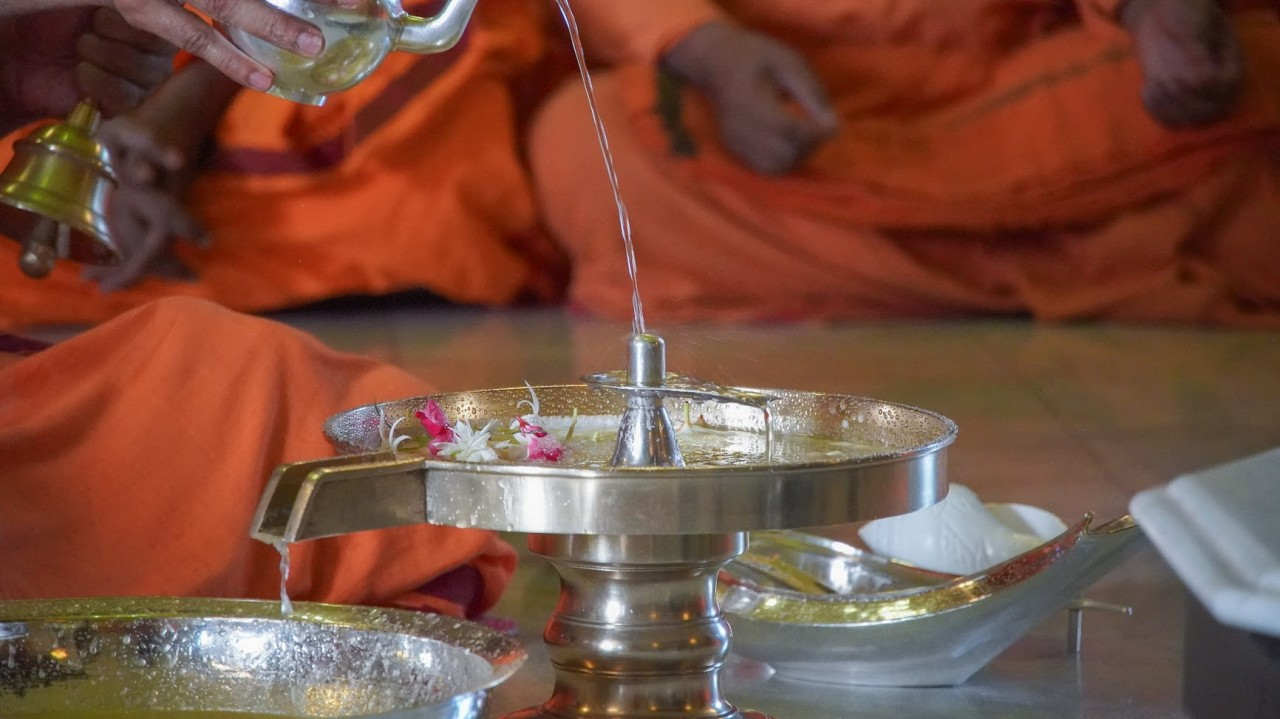
Dedicated to Lord Shiva, Shivratri is a time of intense reverence and spiritual value. Followers of the Destroyer and Transformer seek their blessings by fasting, reciting mantras, and conducting many pujas. But did you know there are different kinds of   Shivratri pujas , each with its unique purpose and rituals? Let's explore some of the most common ways to connect with Lord Shiva on this auspicious occasion. Abhishek: The Holy Bathing Ritual The Abhishek is one of the most frequent and strong pujas. Bathed with several holy materials, the Shivling is the symbolic image of Lord Shiva in this custom. Consider it as a spiritual purging of the idol as well as the soul of the devotee. Along with water, honey, yogurt, ghee, sugar, and occasionally water are employed; every one has its own meaning and significance. The Abhishek is said to cleanse the body, spirit, and mind, therefore clearing away bad energy and opening up the path to spiritual development. Rudra Abhishek: Expounding o...