Posts

Showing posts with the label Shiva idols

Mahadeva, Rudra, Shankara: The Many Names of Shiva

Image
Lord Shiva is known by countless names across Hindu scriptures, devotional traditions, and regional cultures. Each name reveals a particular quality, role, or aspect of his divine nature . Rather than being merely different names for the same deity, these titles offer different ways of understanding Shiva as the compassionate lord, fierce cosmic power, supreme yogi, and master of transformation. Mahadeva: The Great God Mahadeva means “the Great God” and expresses Shiva’s supreme status. The name reflects his transcendence beyond ordinary distinctions and his role as a powerful divine presence within the Hindu understanding of the cosmos. Devotees use this name to invoke Shiva as the supreme and all-encompassing Lord . Rudra: The Formidable One Rudra represents one of Shiva’s most ancient and powerful aspects. The name is associated with ideas of fierceness, power, and transformation . In the Vedic tradition, Rudra is a formidable deity connected with storms, healing, wild nature, ...

Urdhvatandava: Lord Shiva’s Upward Dance

Image
Lord Shiva is famous for his cosmic dance, called Tandava, which represents the rhythm of the universe. Among the many forms of this dance, Urdhvatandava is one of the most striking and meaningful. What Does “Urdhvatandava” Mean? Urdhva means “upward” or “raised.” Tandava refers to Shiva’s powerful dance. So, Urdhvatandava is the “upward dance” of Shiva. What Does Urdhvatandava Look Like? In this dance, Shiva is shown in a unique and energetic pose: Right leg lifted high: Shiva raises his right leg straight up, almost touching his ear. This shows his strength, balance, and control. Four arms: Each arm has a special gesture: Upper right hand: Holds the raised leg. Upper left hand: Stretches upward. Lower right hand: Shows the abhaya mudra (gesture of protection and fearlessness). Lower left hand: Shows the varada mudra (gesture of giving blessings). This posture is not just beautiful but also full of meaning. What Does Urdhvatandava Symbolize? Spiritual Growth: The raised leg points ...

Shiva Ratri Vrata Mahatmya : The Glory of Fasting and the Method of Shivaratri Puja as Told by Lord Shiva

Image
   The article "Shiva Ratri Vrata Mahatmya: The Glory of Fasting and the Method of Shivaratri Puja as Told by Lord Shiva" emphasizes the significance of observing the Maha Shivaratri fast and performing the associated rituals. It details the prescribed methods of fasting and conducting the puja, as conveyed by Lord Shiva himself. The article outlines the steps for devotees to properly observe the fast and perform the puja to honor Lord Shiva during this auspicious occasion. Source and related content: https://www.exoticindiaart.com/article/shiva-ratri-vrata-mahatmya-fasting-and-the-method-of-shivaratri-puja-as-told-by-lord-shiva/

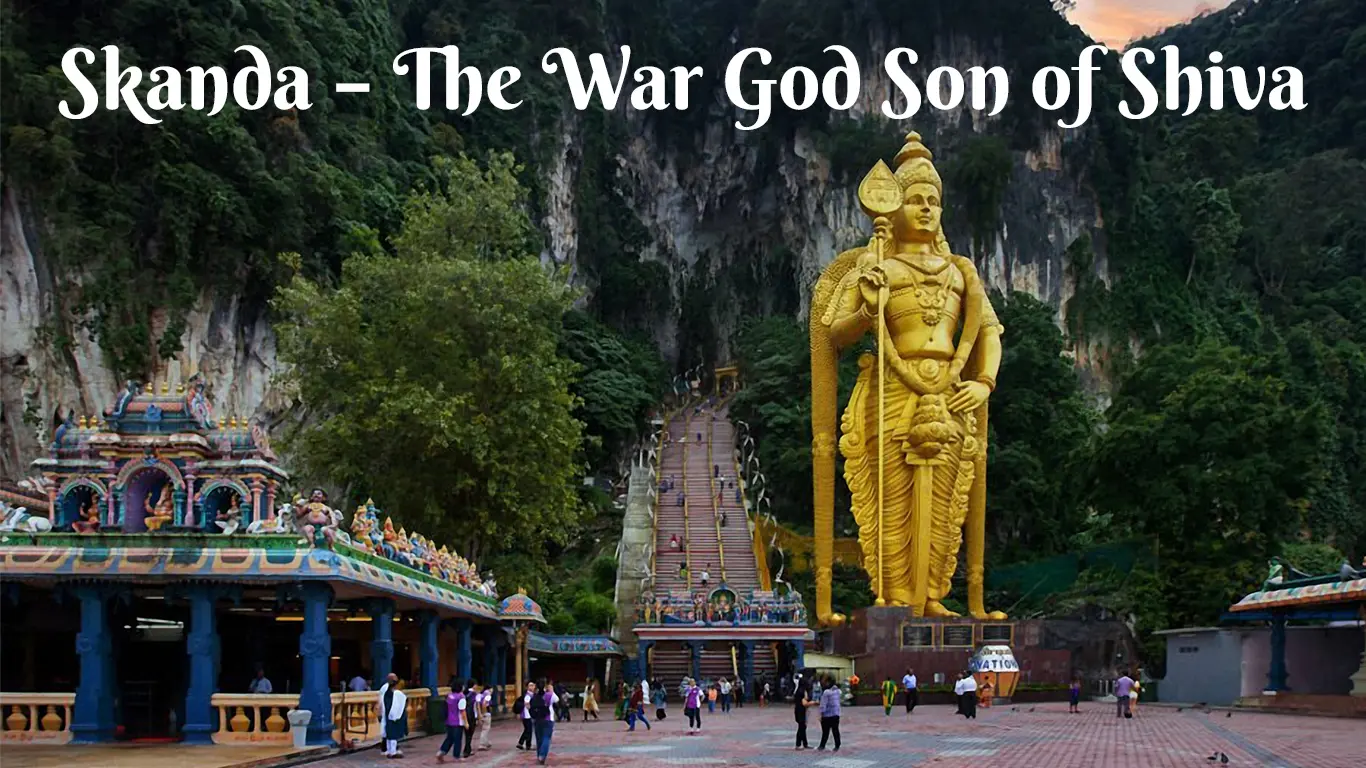
Skanda – The War God Son of Shiva

Image
This is a blog about Skanda, the Hindu god of war. It discusses his history, iconography, and stories. Skanda is the son of Shiva and Parvati. He is known for his battle with the demon Tarakasura. He is also associated with wisdom and is worshipped for protection and bravery. His most popular icons depict him as a six-headed god. He is often shown with his wives Devasena and Valli. Sources and related content: Skanda – The War God Son of Shiva - Exotic India Art www.exoticindiaart.com

देवी पार्वती - हिंदू धर्म की सर्वाधिक जटिल देवी

Image
Parvati is the most complex of all goddesses in the Hindu pantheon. She mirrors the various roles of Mahadeva, the Supreme Purusha. As Prakriti, Devi balances the male aspect addressed as Purusha. As Lord Shiva’s consort, she is Shakti. https://www.exoticindiaart.com/article/goddess-parvati-the-most-complex-goddess-in-the-hindu-pantheon/

Exploring the Divine Forms of Lord Shiva

Image
Introduction to Lord Shiva Shiva is the principal deity in Hinduism, worshipped as the paramount lord in the Saivite sect of India. He is the lord responsible for the beginning, existence, and conclusion of the life cycle. He is the forming part of the Holy Trinity (Trimurti) along with Brahma, the creator, and Vishnu the preserver. The significance of Shiva as a supreme is that his diverse stories and aspects are permanent in Hindu rituals, festivals, and practices.  Shiva Statues and Idols Shiva statues and idols are quite profound in Hindu traditions serving as a spiritual element and a home decor. Shiva idols play a major role in Hindu festivities like Maha Shivratri to seek his blessings. In Home Decor, Shiva Idols add an aesthetic and spiritual dimension bringing in a sense of divine presence. Their presence brings in a sense of prosperity creating space that reflects devotion and aesthetic appreciation.  Dancing Shiva Statues Shiva in his cosmic dancer form is referr...

Mahadeva’s 11 Rudra Avatars

Image
Rudra literally means “he who has a fearsome cry In the Shata-Rudra Samhita of the Shiva Purana, Mahadeva’s 11 Rudra Avatars are mentioned with great reverence. The actual number of Rudras is incomprehensible, with Hindu texts and hymns such as the powerful Shatarudriya from the Vedic Samhitas describing a hundred thousand forms of Rudra. https://www.exoticindiaart.com/article/11-rudra-avatars-of-mahadeva/

The Mystical Powers of the Shiva Lingam: A Deep Dive

Image
According to the Puranas , after Lord Brahma and Lord Vishnu got into a fight over who was stronger, the Supreme God, Shiva , was asked to intervene on behalf of all other gods. Assuming the shape of a flaming linga, he challenged the fighting gods to find the beginning (aadi) and end (anth) of the flame. While Lord Brahma used a swan to travel high in search of the flame's tip, Lord Vishnu used Varaha to travel down below. Despite going thousands of miles, neither could find the tip, which is when Brahma made the false claim that he had seen it. Lord Shiva suddenly arrived from the center of the flaming pillar, revealing Brahma's lie. Both Brahma and Vishnu eventually had to recognize Shiva's supremacy. Shiva then cursed Brahma, saying that he would never be prayed to be anybody, which is why there are so few temples devoted to him. And because the Ketaki flower helped Brahma in his deception, she too was cursed to be presented in any form of worship. Because all of this h...

Understanding the Symbolism of Lord Shiva's Idol

Image
Lord Shiva, one of Hinduism's most adored deities, is frequently represented through elaborate and symbolic idols. These Lord Shiva idols are rich in symbolism and meaning, expressing several aspects of Lord Shiva's sacred nature. Understanding the symbolism underlying Lord Shiva's idols allows us to obtain a better understanding of the profound teachings and philosophies related to this powerful deity. The Third Eye of Wisdom The depiction of a third eye on Lord Shiva's forehead is one of the most stunning characteristics of his statue. This third eye represents wisdom, inner vision, and spiritual understanding. It represents the ability to figure out the truth of existence beyond the realm of the physical. The third eye of Lord Shiva is said to have the power to remove ignorance and illusions, leading to enlightenment. The Crescent Moon Adorning Lord Shiva's matted hair represents a crescent moon, which has great symbolism. The moon represents the mind and ...