Posts

Showing posts with the label hindu mythology

Indra: The Thunder God and His Greatest Battles

Image
Lord Indra, the king of the Devas, occupies an important position in Vedic and later Hindu literature. He is known as a powerful warrior, the wielder of the Vajra, and the slayer of Vritra. However, later Hindu texts also describe several situations in which Indra comes into conflict with powerful sages. These stories are usually connected with tapas, or intense spiritual austerities. According to these traditions, a sage who performed severe penance could accumulate extraordinary spiritual power and receive powerful boons. Indra sometimes feared that such power might disturb the balance of the celestial world. As a result, some stories describe him attempting to interrupt or test the austerities of these sages. 1. Indra and Vishvamitra The story of Vishvamitra is one of the best-known examples of Indra’s concern about a sage’s spiritual power. Vishvamitra was originally a king who later turned toward intense austerities after his encounter with the sage Vashishtha. His prolonged tapas...

The Twelve Lights That Illuminate the Path to Shiva

Image
The Holiest Forms of Lord Shiva The 12 Jyotirlingas are among the most sacred shrines dedicated to Lord Shiva and hold immense significance in Hinduism. The word "Jyotirlinga" comes from the Sanskrit words jyoti (divine light) and linga (the symbolic form of Lord Shiva), meaning the "Linga of Eternal Divine Light." According to the Shiva Purana , the Jyotirlingas originated when Lord Shiva manifested as an infinite pillar of light to demonstrate His boundless nature before Lord Brahma and Lord Vishnu. Each Jyotirlinga represents a unique aspect of Shiva's divine power, and visiting these sacred shrines is believed to purify the soul and bring devotees closer to moksha (liberation). 1. Somnath (Gujarat) Known as the first Jyotirlinga, Somnath is associated with the Moon God (Chandra), who worshipped Lord Shiva here to overcome a curse. It symbolizes healing, renewal, and the victory of faith over adversity. 2. Mallikarjuna (Andhra Pradesh) Located on Srisail...

Where Shakti Dances: The Forgotten Yoginis of Power

Image
 In the quiet spaces of ancient India, beyond grand temples and familiar gods, there existed a sacred sisterhood known as the Yoginis. They were not gentle divinities of comfort but powerful embodiments of transformation, mystery, and inner awakening. The Yoginis belonged to an older spiritual vision where the divine feminine was raw, untamed, and deeply connected to the forces of nature and the human soul. To encounter the Yoginis was not to seek blessings alone but to face truth, fear, and liberation. The Yoginis are most often described as a group of sixty-four, each representing a distinct cosmic energy. Some embodied fierce aspects of time and death, while others governed healing, desire, wisdom, or hidden knowledge. Together they formed a complete circle of power, symbolising the totality of existence. Their worship emerged from Tantric traditions, where spiritual growth was achieved not by renunciation of the world but by deep engagement with its energies. Through ritual, m...

Astra: When Power Obeys Dharma

Image
Astra: The Evolution of Divine Power in Hindu Thought In popular imagination, an Astra is often pictured as a spectacular, destructive weapon, a tool designed solely for war. Movies, comics, and folklore have reinforced this image, portraying astras as extraordinary arms that could annihilate armies or shake the earth. However, the deeper understanding of Astra in Hindu scriptures is far more profound and nuanced, transcending mere physical combat. In the Vedas , an astra is not just a weapon. It is a manifestation of cosmic power, a channel to the forces that govern the universe. Each astra is associated with a deity—Agni, Varuna, Indra—and is invoked through precise mantras . Its power is inseparable from Rta , the cosmic order, and it represents the harmonious flow of universal energies rather than human violence. Here, the astra embodies the subtle, disciplined connection between human consciousness and the divine forces of nature. The Upanishads deepen this understanding furthe...

Written in the Stars: The Nakshatras That Shape Human Destiny

Image
In Sanatan Dharma, human life is not seen as separate from the cosmos but as deeply woven into it. The ancient sages observed the skies not just as astronomers but as seekers of truth, believing that planetary movements and star patterns influence human destiny, nature, and spiritual growth. This understanding gave rise to the concepts of Graha (planets) and Nakshatra (lunar constellations), which together form the backbone of Vedic astrology. Rather than predicting fate in a rigid sense, Graha and Nakshatra reveal the subtle energies that shape tendencies, challenges, and opportunities in a person’s life. 27 Nakshatras 27 days The Grahas are not merely physical planets but living cosmic forces. Each Graha represents a specific aspect of existence. Surya symbolizes soul, authority, and vitality. Chandra governs the mind, emotions, and memory. Mangala reflects energy and courage, while Budha governs intelligence and communication. Guru represents wisdom and expansion, Shukra pleasure...

Parashurama: Where Austerity Met Unyielding Justice

Image
Parashurama stands as one of the most intense and complex avatars of Lord Vishnu, embodying both deep spiritual wisdom and uncompromising justice. Born to Sage Jamadagni and Renuka, he was a Brahmin by birth, trained in sacred knowledge, austerity, and restraint. Yet, unlike other sages, he also mastered warfare and divine weapons, earning the axe gifted by Lord Shiva as his symbol. This unique combination of ascetic discipline and martial power defines Parashurama’s identity as a warrior sage who rose not for conquest, but for correction. Bhagwan Parashurama His transformation into a force against adharma began with the brutal killing of his father by the arrogant king Kartavirya Arjuna. This act was not an isolated crime, but a reflection of widespread misuse of power by rulers of the age. Parashurama’s response was driven by duty rather than revenge. He vowed to restore balance by humbling corrupt kings, defeating those who ruled through fear and pride. Tradition holds that he subdu...

Shiva Ratri Vrata Mahatmya : The Glory of Fasting and the Method of Shivaratri Puja as Told by Lord Shiva

Image
   The article "Shiva Ratri Vrata Mahatmya: The Glory of Fasting and the Method of Shivaratri Puja as Told by Lord Shiva" emphasizes the significance of observing the Maha Shivaratri fast and performing the associated rituals. It details the prescribed methods of fasting and conducting the puja, as conveyed by Lord Shiva himself. The article outlines the steps for devotees to properly observe the fast and perform the puja to honor Lord Shiva during this auspicious occasion. Source and related content: https://www.exoticindiaart.com/article/shiva-ratri-vrata-mahatmya-fasting-and-the-method-of-shivaratri-puja-as-told-by-lord-shiva/

Goddess Padmavati : The Consort of Lord Venkateswara and the Goddess of Prosperity

Image
    Goddess Padmavati, an incarnation of Lakshmi, is the consort of Lord Venkateswara. Born to King Akasha Raja, her divine marriage is celebrated in Hindu tradition. She is worshipped for prosperity, and her main shrine is at Tiruchanur, near Tirupati. Often depicted seated on a lotus, she symbolizes grace and wealth. Sources and related content: https://www.exoticindiaart.com/article/goddess-padmavati/

Rama Raksha Strotram: Sri Rama’s Eternal Sheild For the Devotee

Image
This is an article about Rama Raksha Strotram. It discusses the Rama Raksha Strotram, a hymn dedicated to the Hindu god Sri Rama. The Rama Raksha Strotram was written by a sage named Budh Kaushik Rishi. It is written in the Padma Purana. It is recited by the devotee regularly or on special occasions to gain blessings and pay respect to the god or goddess who is addressed in the Stotra. Sources and related content: https://www.exoticindiaart.com/article/rama-raksha-strotram/

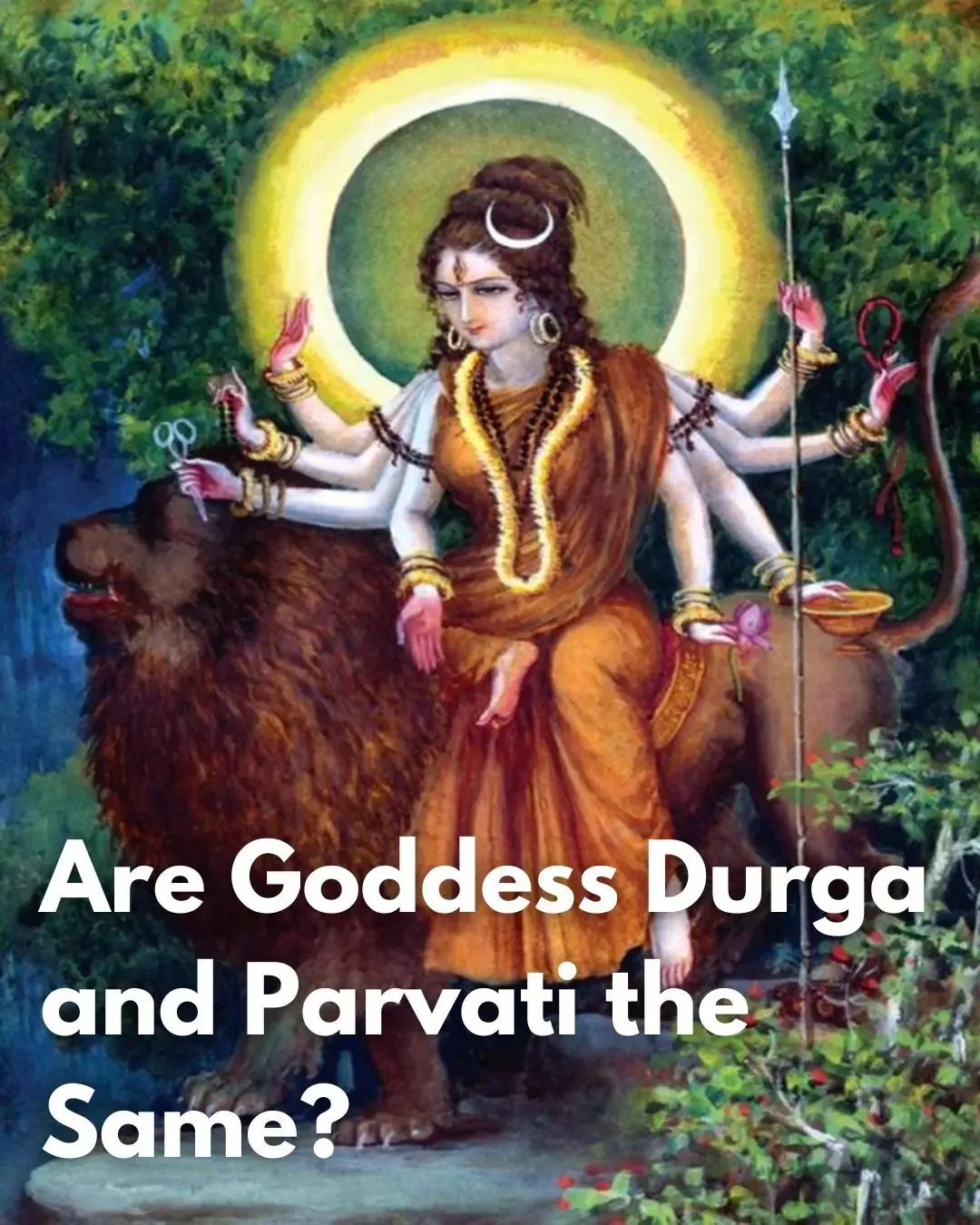
Are Goddess Durga and Parvati the Same?

Image
This is an article about the Hindu goddesses Durga and Parvati. It discusses their relationship and how they are viewed in Hinduism. Durga and Parvati are often seen as different aspects of the same divine feminine energy. Durga is the warrior goddess, while Parvati is the wife of Shiva. The two goddesses are worshipped in different ways, with festivals and rituals dedicated to each. Some popular mantras for Durga and Parvati are also provided. The article also discusses the nine forms of Durga, celebrated during the Navaratri festival. The article concludes by discussing other Hindu goddesses, such as Lakshmi and Yamuna. Sources and related content: https://www.exoticindiaart.com/article/are-goddess-durga-and-parvati-the-same/

Connecting with the Divine: The Significance of Temples in Indian Culture

Image
Temples In India (Origin And Developmental Stages) The spectrum of Indian heritage incorporates the prominent traditional spiritual elements known as temples. The architectural wonders of India function as sacred places for worship yet simultaneously demonstrate the country's superb artistic abilities and skilled craftsmanship. Georgia's temples underwent continuous development throughout history which mirrored the religious and cultural diversity of its population from ancient times until the current period.  Indus Valley Civilization Temple architecture in India began with the Indus Valley Civilization that existed from 3300 BCE. Evidence from the remains of the Harappan civilization demonstrates that fire altars were the oldest structures that qualify as temples. The Nagara temple architectural style that remains famous today was born during the Gupta dynasty period (320-550 CE) when temple architecture reached its height.  The architectural essence of the Nagara style ...

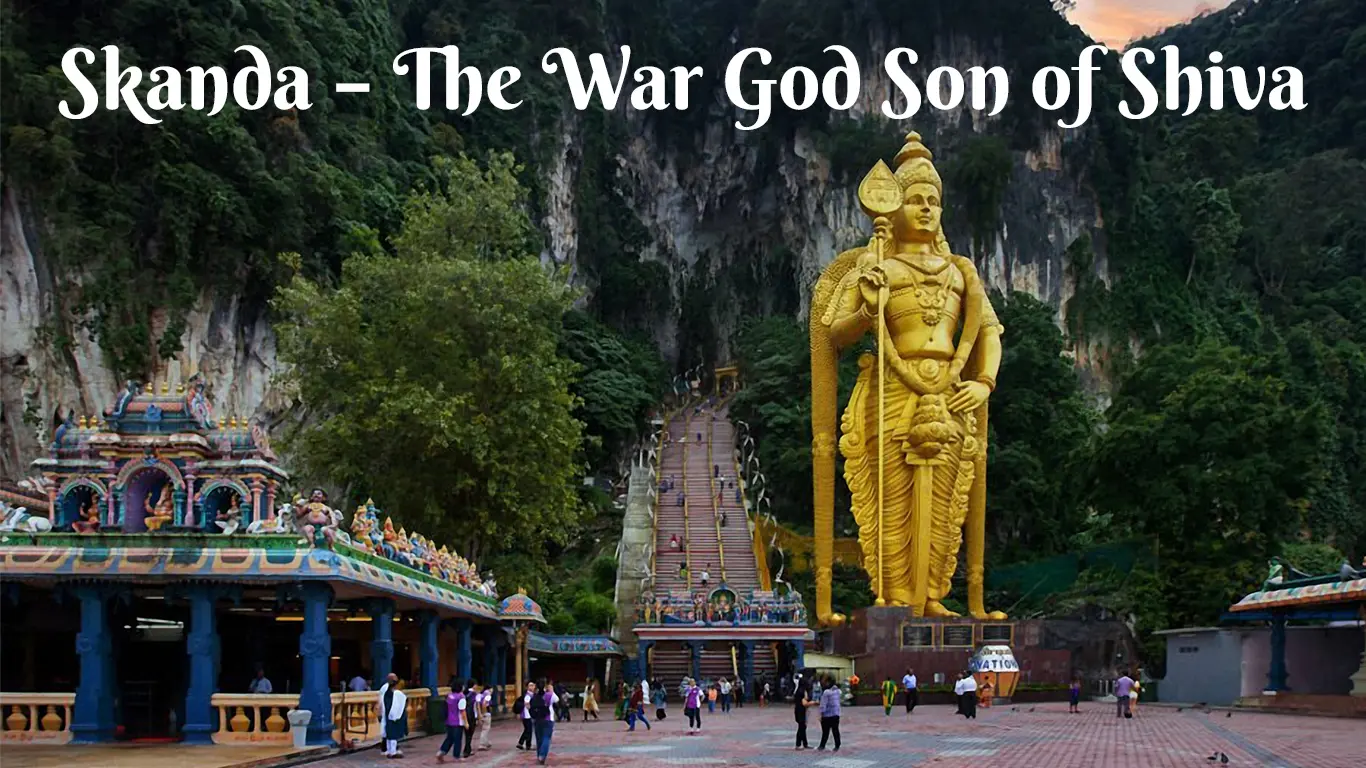
Skanda – The War God Son of Shiva

Image
This is a blog about Skanda, the Hindu god of war. It discusses his history, iconography, and stories. Skanda is the son of Shiva and Parvati. He is known for his battle with the demon Tarakasura. He is also associated with wisdom and is worshipped for protection and bravery. His most popular icons depict him as a six-headed god. He is often shown with his wives Devasena and Valli. Sources and related content: Skanda – The War God Son of Shiva - Exotic India Art www.exoticindiaart.com

Discovering the Hidden Meanings: Vahanas of Hindu Deities

Image
Vahanas are special animals or vehicles which are typically associated with each god or goddess in Hindu mythology. These vehicles are not just animals that the deity rides on but depict aspects of the deity’s character, function in the universe, and power. Let's explore some prominent examples: •  Lord Ganesha and the Mouse (Mushak) The most famous Hindu deity,  Ganesha  who has an elephant head and four arms, sits on a mouse. This is to signify that no matter how tiny one is, he or she can rise above odds and be great. It also warns the audience that during battle, the ego is the single biggest and most dangerous foe that can be faced. •  Lord Shiva and the Bull (Nandi) Nandi, the divine cow is the vehicle of  Lord Shiva  – the destroyer and the changer. The bull symbolizes power, masculinity fidelity, and loyalty. It also represents virtue of strength and the capacity to go through the game of life vicissitudes. •  Lord Vishnu and the Garuda Garuda,...