Posts

Showing posts with the label Gods and Goddesses

Goddess Saraswati’s Divine Songs for Celebrating Knowledge and Faith

Image
Saraswati Puja, one of the most sacred festivals in the Hindu calendar, is a divine celebration dedicated to Goddess Saraswati , the embodiment of wisdom, learning, arts, and spiritual enlightenment. Observed primarily during Basant Panchami and in the early days of Navratri , this festival invites devotees to seek her blessings for knowledge, creativity, and clarity of thought. Saraswati, often depicted in white attire, seated on a lotus, playing the veena, symbolizes purity, focus, and the eternal flow of divine knowledge. Goddess Sarawati The rituals of Saraswati Puja are filled with devotion and spiritual intent. Homes, temples, and schools are beautifully adorned, and sacred spaces are created for the goddess’s presence. Devotees place books, musical instruments, and tools of art before her idol or image, offering flowers, fruits, and incense with reverent hands. Children and students often begin new academic endeavors on this day, as invoking the goddess ensures guidance, prote...

From Temple Throne to Human Life: The Kumari Story

Image
  Across cultures, people understand god and the goddess through many forms and symbols. When the divine cannot be seen directly, faith often takes shape through sacred image, symbols, or inner awareness. In Nepal, these beliefs appear in a rare and sacred way through the tradition of the living deity, the goddess Kumari is believed to dwell in human form and is worshipped as a living presence. A large number of devotees in Nepal worship the living Kumari and believe that seeing her can bring good fortune, protection, and blessings into their lives. This remarkable tradition carries a deeply meaningful origin story rooted in faith and the human experience of the divine in living form. WHO IS KUMARI The Goddess Tulaja  Before delving into the story of the Kumari, it is important to understand who she is and the sacred tradition she represents. In Nepal, the Kumari is a young girl, typically between the ages of two and five, usually from the Newar Shakya caste, who is chosen thr...

Beyond Beauty: Indian Jewellery as Social and Sacred Code

Image
 Indian jewellery is often admired for its glittering gold, vibrant gemstones, and visual grandeur. Yet to view it only as decoration is to overlook its deeper purpose. For centuries, jewellery in India has functioned as a living archive, quietly preserving stories of trade, faith, power, and community. Every ornament carried meaning, acting as a cultural record passed from one generation to the next. Unlike many Western traditions, where emphasis rested on brilliance, symmetry, and precision cutting, Indian jewellery evolved around technique, symbolism, and intent. The value of an ornament was not judged merely by how brightly it shone, but by how deeply it resonated with ritual, identity, and belief. Jewellery was worn not just to adorn the body, but to protect it, sanctify it, and situate it within the cosmic and social order. Techniques such as kundan , polki , meenakari , and temple jewellery emerged from specific historical and spiritual needs. Kundan and polki flourished in...

Goddess Meenakshi: Strength, Grace, and Sovereignty

Image
Goddess Meenakshi Long before Madurai became the cultural heart of the Tamil land, it was ruled by the Pandyan king Malayadhwaja Pandiyan and Queen Kanchanamalai . Though their kingdom prospered, the royal couple carried a quiet sorrow. They longed for a child who would continue their lineage. After intense prayers and sacred rituals, their wish was answered unexpectedly. From a divine fire emerged a baby girl, radiant and powerful, with striking fish-shaped eyes. She was named Meenakshi , a name that would one day echo across centuries. From childhood, Meenakshi was unlike any other princess. She showed no fear, no hesitation. While others learned grace and decorum, she trained with swords, studied warfare, and mastered statecraft. The people of Madurai watched in awe as their princess grew into a warrior and a ruler. When her father passed away, Meenakshi ascended the throne, not as a fragile queen, but as a commanding leader who ruled with strength and compassion. Madurai'S Pri...

Goddess Lakshmi The Gentle Radiance That Guides Every Home

Image
Queen of the Golden Lotus Goddess Lakshmi Goddess Lakshmi is the radiant mother of prosperity and the gentle heart of abundance. Her presence is seen as a warm light that brings peace, growth, and harmony to every life she touches. In sacred stories, she appears with a calm smile and a glowing aura, seated on a lotus that rises above the waters of creation. This lotus is not just a flower. It is a symbol of purity and strength. It teaches that true fortune blooms even when life is filled with challenges. Goddess Lakshmi From ancient times, people have looked to Goddess Lakshmi as the guide who helps them rise from fear to confidence and from struggle to stability. She is not fortunate that comes by chance. She is fortunate that she grows through truth, effort, and a calm heart. Her blessings show that wealth is not only money. It is also wisdom, courage, love, and a clear mind. One of the most loved stories about Goddess Lakshmi comes from the great event called Samudra Manthan. When ...

When Sacred Energy Flows Through the Home

Image
 Lakshmi - Ganesha  Once upon a time, in the quiet corners of the world, a soft golden light began to shine. Families would gather in their homes, placing tiny lamps that twinkled like stars. On this special night, Goddess Lakshmi, the gentle mother of wealth and beauty, and Lord Ganesha, the wise remover of all troubles, would visit every home. Legends say that Lakshmi wanted to bless the world with endless fortune, but she knew that riches alone cannot flourish where peace and wisdom are absent. So she called upon Ganesha, and together they promised to guide and protect every heart that welcomed them with love. Lakshmi and Ganesha From that day forward, people began the sacred ritual of keeping Lakshmi and Ganesha together. Their statues or pictures would sit side by side, Lakshmi on the right and Ganesha on the left, radiating calm and joy. A glowing lamp, fresh flowers like lotus and marigold, a small Kalash filled with water and coconut, and offerings of fruits and sweets...

Prabhavali Meaning & Symbolism: The Sacred Halo Behind Hindu Deities

Image
  Prabhavali Meaning & Symbolism: The Sacred Halo Behind Hindu Deities A prabhavali is the sacred halo arch placed behind Hindu deities, symbolising divine radiance, spiritual energy, and celestial presence. In classical Indian iconography and Shilpa Shastra traditions, it represents the prabha —the luminous aura believed to emanate from the deity. By separating the murti from the surrounding space, the prabhavali creates depth, focus, and a sense of elevated sanctity. Crafted in brass, bronze, wood, or stone, it amplifies the glow of lamps during worship and transforms the visual atmosphere of both temples and home shrines.

Goddess Padmavati : The Consort of Lord Venkateswara and the Goddess of Prosperity

Image
    Goddess Padmavati, an incarnation of Lakshmi, is the consort of Lord Venkateswara. Born to King Akasha Raja, her divine marriage is celebrated in Hindu tradition. She is worshipped for prosperity, and her main shrine is at Tiruchanur, near Tirupati. Often depicted seated on a lotus, she symbolizes grace and wealth. Sources and related content: https://www.exoticindiaart.com/article/goddess-padmavati/

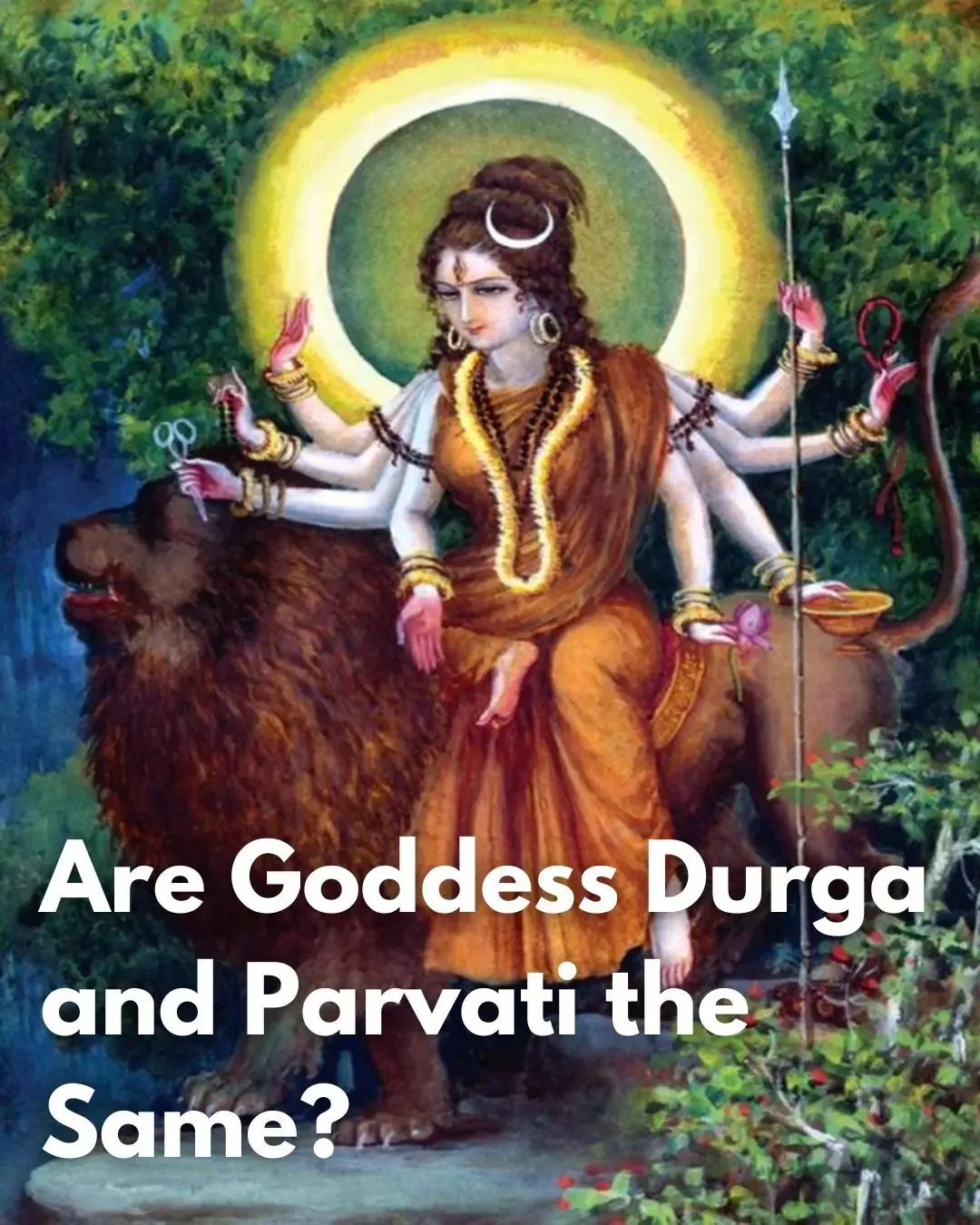
Are Goddess Durga and Parvati the Same?

Image
This is an article about the Hindu goddesses Durga and Parvati. It discusses their relationship and how they are viewed in Hinduism. Durga and Parvati are often seen as different aspects of the same divine feminine energy. Durga is the warrior goddess, while Parvati is the wife of Shiva. The two goddesses are worshipped in different ways, with festivals and rituals dedicated to each. Some popular mantras for Durga and Parvati are also provided. The article also discusses the nine forms of Durga, celebrated during the Navaratri festival. The article concludes by discussing other Hindu goddesses, such as Lakshmi and Yamuna. Sources and related content: https://www.exoticindiaart.com/article/are-goddess-durga-and-parvati-the-same/

Who is Meldi Maa?

Image
  This is an article about Meldi Maa, a Hindu goddess. It discusses her legend, her iconography, and her temples. Meldi Maa is a local, folk goddess of Gujarat, mainly worshipped in Saurashtra, western Gujarat, as the protector of farmlands and peoples. She is believed to have been created by dirt from the hands of Goddess Uma. She is often depicted riding a goat with eight hands. Devotees seek her blessings for success in their travels, especially to the United States. The article also mentions that Meldi Maa is a popular subject in Mata ni Pachedi, a Gujarati folk art form. Sources and related content: https://www.exoticindiaart.com/article/who-is-meldi-maa/

Kurma (Turtle) : Lord Vishnu's Second Incarnation (Avatar)

Image
  The article on the Kurma Avatar describes Lord Vishnu's second incarnation as a tortoise. This form emerged to support Mount Mandara during the churning of the ocean, aiding the gods in obtaining the nectar of immortality. Kurma, as a symbol of endurance and stability, played a crucial role in maintaining balance during this cosmic event. The story highlights the importance of Vishnu's various avatars in preserving cosmic order. Source and related content: https://www.exoticindiaart.com/article/kurma-avatar-lord-vishnu-second-incarnation/

How Hindu God Statues are Preserved as Artifacts in Museums

Image
  Art Museums  showcase a plethora of statues and sculptures from the ancient period to masterpieces handcrafted by artisans in modern times. Carved from stone or cast in bronze and brass, the statues display enchanting features representing the cultural, traditional, and different artistic styles of the era. One of the main attractions in Indian Artifacts is the intricately crafted  Hindu Gods and Goddesses statues . Some commonly displayed deities are Lord Shiva, Lord Vishnu, Lord Krishna, Lord Ganesha, Goddess Lakshmi, Goddess Saraswati, Goddess Durga, and Lord Hanuman. Their iconography and symbolism are appreciated by art connoisseurs across the globe.  India is a country with countless artistic talents that are passed down from one generation to another. South India is especially renowned for brass artistry using the age-old Lost Wax Method which involves several steps. The intricate details are worth seeing and admiring. Similarly, stone art on walls and pilla...

काली के रूप में देवी माँ: भारतीय कला में स्त्री शक्ति

Image
काली माता की कहानी सिर्फ एक देवी की कहानी नहीं है, बल्कि यह स्त्री शक्ति की कहानी है। इस वीडियो में हम कला के माध्यम से इस कहानी को समझेंगे। https://www.exoticindiaart.com/article/kali/

देवी पार्वती - हिंदू धर्म की सर्वाधिक जटिल देवी

Image
Parvati is the most complex of all goddesses in the Hindu pantheon. She mirrors the various roles of Mahadeva, the Supreme Purusha. As Prakriti, Devi balances the male aspect addressed as Purusha. As Lord Shiva’s consort, she is Shakti. https://www.exoticindiaart.com/article/goddess-parvati-the-most-complex-goddess-in-the-hindu-pantheon/

Mahadeva’s 11 Rudra Avatars

Image
Rudra literally means “he who has a fearsome cry In the Shata-Rudra Samhita of the Shiva Purana, Mahadeva’s 11 Rudra Avatars are mentioned with great reverence. The actual number of Rudras is incomprehensible, with Hindu texts and hymns such as the powerful Shatarudriya from the Vedic Samhitas describing a hundred thousand forms of Rudra. https://www.exoticindiaart.com/article/11-rudra-avatars-of-mahadeva/

Three Captivating Stories From Hindu Mythology Involving Lord Vishnu And Lord Shiva

Image
Begin your journey through ancient Indian mythology with three captivating stories starring Lord Vishnu and Shiva . With their supernatural skills, heroic battles, and peaceful deeds, these mythical figures have enchanted generations. Prepare to be transported to a realm where gods take human form, dispel darkness with their bright brilliance, and create destiny with their intricate dance between preservation and destruction, whether you are well-versed in Hinduism or fresh to these enthralling tales. Join us as we uncover these enthralling stories that continue to inspire loyalty, curiosity, and wonder in followers from all around the world. Shiva and Vishnu - The Legend of Badrinath In the lofty Himalayas, at approximately 10,000 feet above sea level, lies the magnificent abode of Shiva and Parvati known as Badrinath. One day, Narada approached Vishnu and reproached him, saying, "You set a poor example for humanity. You constantly recline on Adishesha, while your wife, Lakshmi,...

The Secrets of Idol Worship or Image Worship

Image
Idol worship has been a significant aspect of many religious practices. While some might perceive it as a rustic or inferior practice, idol worship holds profound meaning and can be transformative when approached with faith and right intentions. In this article, we will explore the lesser-known aspects of this divine worship and how it encompasses various yogas. 1. Idol Worship: An Integrated Practice of Many Yogas Idol worship in Hinduism  is a holistic practice that combines elements of different yogas mentioned in the Bhagavadgita. It involves gaining knowledge (jnana yoga) about the deity and the correct procedures for worship. Practicing detachment and selflessness (sanyana yoga) helps cultivate the right attitude and virtuous conduct. Engaging in contemplation of the deity stabilizes the mind and brings tranquility (atma samyama yoga). Purifying the intelligence (buddhi yoga) enables one to choose the appropriate way to worship and the right deity. Finally, performing the rit...