Posts

Showing posts with the label Hindu Gods Idols

Ashtabhujadharini Goddess Kali: The Eight-Armed Divine Protector

Image
Ashtabhujadharini Goddess Kali is a powerful and revered form of the Hindu goddess Kali, known for her eight arms, each holding a symbolic weapon. The name "Ashtabhujadharini" literally means "the bearer of eight arms." This fierce form of Kali embodies ultimate strength, protection, and the ability to destroy all forms of evil, making her a central figure in Shakti worship and Tantric traditions. Who is Ashtabhujadharini Kali? Goddess Kali is celebrated as the goddess of time, destruction, and transformation. She represents both the end and the beginning, signifying that destruction is necessary for rebirth and new creation. In her Ashtabhuja (eight-armed) form, Kali is even more formidable, symbolizing her readiness to combat multiple threats at once and her capacity to protect her devotees from all directions. Each of her eight hands holds a different weapon or symbol, such as the conch, chakra (discus), mace, Aquarius, pestle, curb, loop, and thunderbolt, each r...

Goddess Padmavati : The Consort of Lord Venkateswara and the Goddess of Prosperity

Image
    Goddess Padmavati, an incarnation of Lakshmi, is the consort of Lord Venkateswara. Born to King Akasha Raja, her divine marriage is celebrated in Hindu tradition. She is worshipped for prosperity, and her main shrine is at Tiruchanur, near Tirupati. Often depicted seated on a lotus, she symbolizes grace and wealth. Sources and related content: https://www.exoticindiaart.com/article/goddess-padmavati/

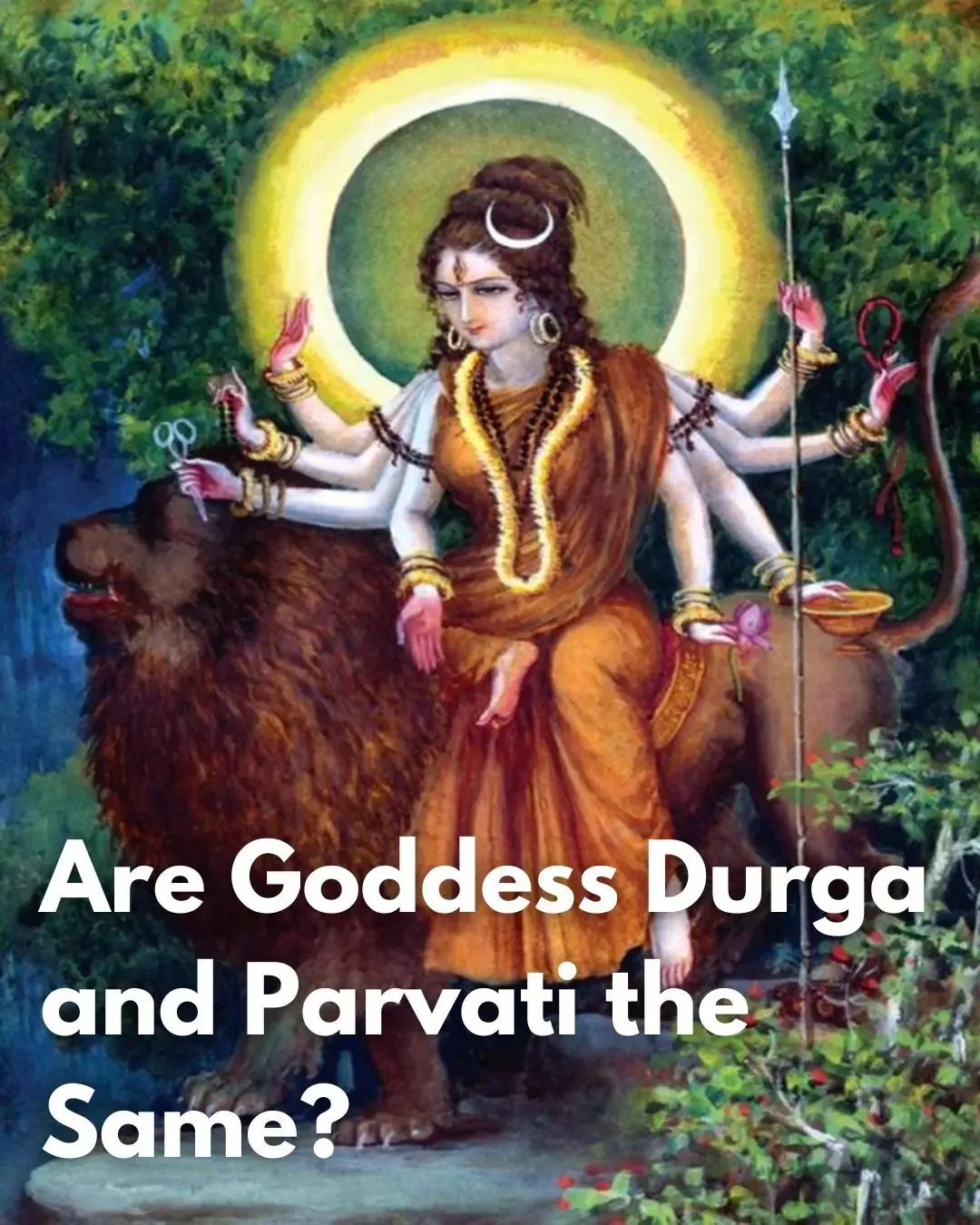
Are Goddess Durga and Parvati the Same?

Image
This is an article about the Hindu goddesses Durga and Parvati. It discusses their relationship and how they are viewed in Hinduism. Durga and Parvati are often seen as different aspects of the same divine feminine energy. Durga is the warrior goddess, while Parvati is the wife of Shiva. The two goddesses are worshipped in different ways, with festivals and rituals dedicated to each. Some popular mantras for Durga and Parvati are also provided. The article also discusses the nine forms of Durga, celebrated during the Navaratri festival. The article concludes by discussing other Hindu goddesses, such as Lakshmi and Yamuna. Sources and related content: https://www.exoticindiaart.com/article/are-goddess-durga-and-parvati-the-same/

Who is Meldi Maa?

Image
  This is an article about Meldi Maa, a Hindu goddess. It discusses her legend, her iconography, and her temples. Meldi Maa is a local, folk goddess of Gujarat, mainly worshipped in Saurashtra, western Gujarat, as the protector of farmlands and peoples. She is believed to have been created by dirt from the hands of Goddess Uma. She is often depicted riding a goat with eight hands. Devotees seek her blessings for success in their travels, especially to the United States. The article also mentions that Meldi Maa is a popular subject in Mata ni Pachedi, a Gujarati folk art form. Sources and related content: https://www.exoticindiaart.com/article/who-is-meldi-maa/

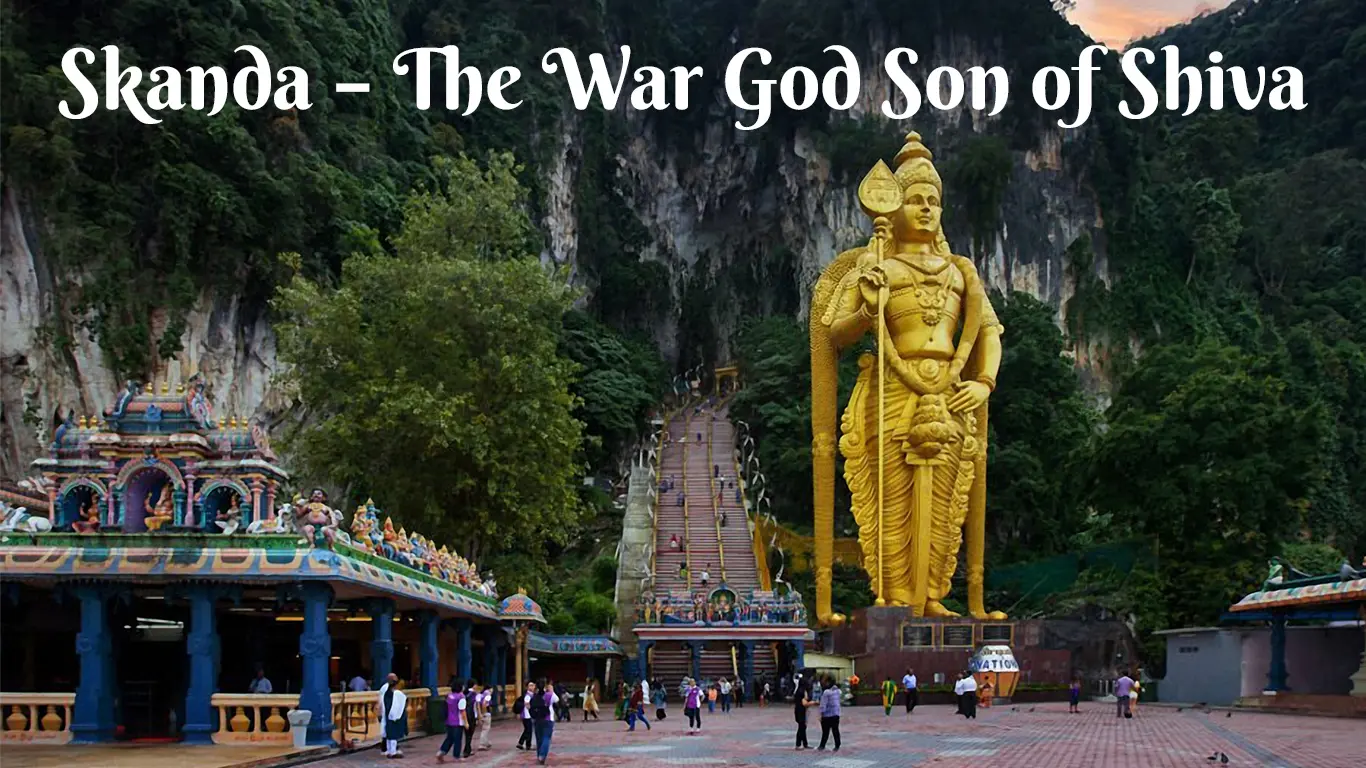
Skanda – The War God Son of Shiva

Image
This is a blog about Skanda, the Hindu god of war. It discusses his history, iconography, and stories. Skanda is the son of Shiva and Parvati. He is known for his battle with the demon Tarakasura. He is also associated with wisdom and is worshipped for protection and bravery. His most popular icons depict him as a six-headed god. He is often shown with his wives Devasena and Valli. Sources and related content: Skanda – The War God Son of Shiva - Exotic India Art www.exoticindiaart.com

Kurma (Turtle) : Lord Vishnu's Second Incarnation (Avatar)

Image
  The article on the Kurma Avatar describes Lord Vishnu's second incarnation as a tortoise. This form emerged to support Mount Mandara during the churning of the ocean, aiding the gods in obtaining the nectar of immortality. Kurma, as a symbol of endurance and stability, played a crucial role in maintaining balance during this cosmic event. The story highlights the importance of Vishnu's various avatars in preserving cosmic order. Source and related content: https://www.exoticindiaart.com/article/kurma-avatar-lord-vishnu-second-incarnation/

Discovering the Hidden Meanings: Vahanas of Hindu Deities

Image
Vahanas are special animals or vehicles which are typically associated with each god or goddess in Hindu mythology. These vehicles are not just animals that the deity rides on but depict aspects of the deity’s character, function in the universe, and power. Let's explore some prominent examples: •  Lord Ganesha and the Mouse (Mushak) The most famous Hindu deity,  Ganesha  who has an elephant head and four arms, sits on a mouse. This is to signify that no matter how tiny one is, he or she can rise above odds and be great. It also warns the audience that during battle, the ego is the single biggest and most dangerous foe that can be faced. •  Lord Shiva and the Bull (Nandi) Nandi, the divine cow is the vehicle of  Lord Shiva  – the destroyer and the changer. The bull symbolizes power, masculinity fidelity, and loyalty. It also represents virtue of strength and the capacity to go through the game of life vicissitudes. •  Lord Vishnu and the Garuda Garuda,...

Matsya Avatar: Vishnu's Fish Incarnation, the First of the Dashavatara

Image
The Matsya Avatar is the first of Lord Vishnu's ten incarnations (Dashavatara) in Hindu mythology. In this form, Vishnu appears as a fish to save the sacred Vedas and humanity from a great deluge. The narrative describes how a demon named Hayagriva stole the Vedas from Brahma, leading Vishnu to take the Matsya form to retrieve them. He also warns King Satyavrata (Manu) of an impending flood, advising him to build a boat and gather all species to preserve life. When the deluge occurs, Matsya guides the boat by tying it to his horn, ensuring the safety of the Vedas and living beings, and ultimately restoring cosmic order. Source and related content: https://www.exoticindiaart.com/article/matsya-avatar/

How Hindu God Statues are Preserved as Artifacts in Museums

Image
  Art Museums  showcase a plethora of statues and sculptures from the ancient period to masterpieces handcrafted by artisans in modern times. Carved from stone or cast in bronze and brass, the statues display enchanting features representing the cultural, traditional, and different artistic styles of the era. One of the main attractions in Indian Artifacts is the intricately crafted  Hindu Gods and Goddesses statues . Some commonly displayed deities are Lord Shiva, Lord Vishnu, Lord Krishna, Lord Ganesha, Goddess Lakshmi, Goddess Saraswati, Goddess Durga, and Lord Hanuman. Their iconography and symbolism are appreciated by art connoisseurs across the globe.  India is a country with countless artistic talents that are passed down from one generation to another. South India is especially renowned for brass artistry using the age-old Lost Wax Method which involves several steps. The intricate details are worth seeing and admiring. Similarly, stone art on walls and pilla...

काली के रूप में देवी माँ: भारतीय कला में स्त्री शक्ति

Image
काली माता की कहानी सिर्फ एक देवी की कहानी नहीं है, बल्कि यह स्त्री शक्ति की कहानी है। इस वीडियो में हम कला के माध्यम से इस कहानी को समझेंगे। https://www.exoticindiaart.com/article/kali/

देवी पार्वती - हिंदू धर्म की सर्वाधिक जटिल देवी

Image
Parvati is the most complex of all goddesses in the Hindu pantheon. She mirrors the various roles of Mahadeva, the Supreme Purusha. As Prakriti, Devi balances the male aspect addressed as Purusha. As Lord Shiva’s consort, she is Shakti. https://www.exoticindiaart.com/article/goddess-parvati-the-most-complex-goddess-in-the-hindu-pantheon/

Mahadeva’s 11 Rudra Avatars

Image
Rudra literally means “he who has a fearsome cry In the Shata-Rudra Samhita of the Shiva Purana, Mahadeva’s 11 Rudra Avatars are mentioned with great reverence. The actual number of Rudras is incomprehensible, with Hindu texts and hymns such as the powerful Shatarudriya from the Vedic Samhitas describing a hundred thousand forms of Rudra. https://www.exoticindiaart.com/article/11-rudra-avatars-of-mahadeva/

Three Captivating Stories From Hindu Mythology Involving Lord Vishnu And Lord Shiva

Image
Begin your journey through ancient Indian mythology with three captivating stories starring Lord Vishnu and Shiva . With their supernatural skills, heroic battles, and peaceful deeds, these mythical figures have enchanted generations. Prepare to be transported to a realm where gods take human form, dispel darkness with their bright brilliance, and create destiny with their intricate dance between preservation and destruction, whether you are well-versed in Hinduism or fresh to these enthralling tales. Join us as we uncover these enthralling stories that continue to inspire loyalty, curiosity, and wonder in followers from all around the world. Shiva and Vishnu - The Legend of Badrinath In the lofty Himalayas, at approximately 10,000 feet above sea level, lies the magnificent abode of Shiva and Parvati known as Badrinath. One day, Narada approached Vishnu and reproached him, saying, "You set a poor example for humanity. You constantly recline on Adishesha, while your wife, Lakshmi,...

The Secrets of Idol Worship or Image Worship

Image
Idol worship has been a significant aspect of many religious practices. While some might perceive it as a rustic or inferior practice, idol worship holds profound meaning and can be transformative when approached with faith and right intentions. In this article, we will explore the lesser-known aspects of this divine worship and how it encompasses various yogas. 1. Idol Worship: An Integrated Practice of Many Yogas Idol worship in Hinduism  is a holistic practice that combines elements of different yogas mentioned in the Bhagavadgita. It involves gaining knowledge (jnana yoga) about the deity and the correct procedures for worship. Practicing detachment and selflessness (sanyana yoga) helps cultivate the right attitude and virtuous conduct. Engaging in contemplation of the deity stabilizes the mind and brings tranquility (atma samyama yoga). Purifying the intelligence (buddhi yoga) enables one to choose the appropriate way to worship and the right deity. Finally, performing the rit...