Posts

Showing posts with the label Ganesha Garden Statues

Indian Statues for Gardens: Timeless Beauty for Your Outdoor Spaces

Image
Transforming your garden into a tranquil oasis or a vibrant cultural space is easy with the right garden statues. Indian statues for gardens are not just decorative pieces—they bring spiritual significance, artistic heritage, and a sense of serenity to any outdoor setting. Whether you want to create a meditative corner, add a touch of tradition, or simply enhance your garden décor, Indian garden statues offer a perfect blend of beauty and meaning. Why Choose Indian Statues for Your Garden? Indian garden statues are renowned for their intricate craftsmanship and deep symbolism. From majestic deities to peaceful Buddha statues , each sculpture tells a story rooted in Indian culture and mythology. These statues are often made from durable materials like granite, marble, or black stone, ensuring they withstand the elements and remain stunning for years. Popular Types of Indian Garden Statues: Buddha Garden Statues : Symbolize peace, enlightenment, and tranquility. Perfect for meditation ...

Ganesha Bronze Statues: Divine Aesthetic Beyond Time

Image
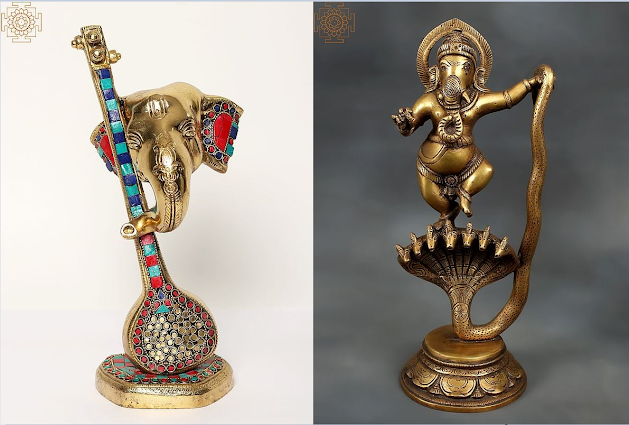
The round-bellied, jolly-natured, elephant-headed Ganesha is, beyond doubt, the most beloved and worshipped god in Hindu culture. His popularity is such that almost all art forms have made Ganesha their divine subject. In the modern time, where everything from metal artistry to stone statues have sculpted Ganapati in their way, the classic Chola bronze statues of Ganesha, where traditional iconography, iconometry, religious poetry of Tamil region, legends of Hindu Puranas and mantras of the first-revered (Prathama-pujya) Ganesha are all melted together through the lost-wax technique- the ancient Madhuchista Vidhana that is at the core of the beautiful bronze statues. Historically, bronze casting in India goes back to the Harappa or Indus Valley Civilization, but it was during the Chola period (9th–13th centuries CE) that bronze sculpture saw its peak. Chola bronzes of Ganesha, with their flowing lines, balanced postures, and animated expressions, are still revered as masterpieces of sa...

शिव और विष्णु: उनकी पूजा का एक अनूठा पहलू

Image
शिव और विष्णु, ये दोनों ही देवता भक्तों के लिए प्रेरणा का स्रोत हैं। इस वीडियो में, हम आपको इन दोनों देवताओं की पूजा के एक ऐसे पहलू से रूबरू कराएंगे। https://www.exoticindiaart.com/article/shiva-and-vishnu/

The Symbolism Behind Lord Ganesha

Image
Decorative symbols and figures are used to represent the special powers of important leaders. Lord Ganesha, often shown with a red and yellow flower, is linked to the hand gesture of explanation. Elephants everywhere symbolize strength, wisdom, and dignity. They were so respected that in ancient times, they were even used to choose new kings! In the past, the strength of an army was measured by its elephants. The largest recorded group had 5,000 elephants and belonged to a king named Rajaraja Chola. White elephants were seen as especially pure, and their birth was believed to bring good times to the whole country. There are many stories about visions of white elephants, including one seen by the mother of a famous prince before his birth. Lord Ganesha, the elephant-headed deity, is a beloved figure in Hinduism, and his form is packed with symbolism. Symbols of Ganesha: Red and yellow flowers, vitarka mudra (hand gesture) - associated with Ganesha. Elephants i...

A Look at Lord Ganesha's Description in the Litanies of His Thousand Names

Image
Lord Ganesha, the beloved elephant-headed deity, is revered across India and beyond. His unique form is an embodiment of power, wisdom, and auspiciousness. But have you ever wondered about the deeper meaning behind his physical attributes? The Litanies of His Thousand Names, a sacred Hindu text, offers a glimpse into the symbolism behind Lord Ganesha's divine body. Ganeša,  the elephant-faced god,  with a single tusk,  a curved trunk,  a prominent belly,  drooping ears,  and a third eye,  is the Lord of the Ganas,  and entertains them despite being their chief.  Smoke-coloured (Dhümravarna),  he is the Awakened Spirit.  This remover of obstacles (Vighnanayaka),  this king of obstacles (Vighnaraja) is also called the happiness of the gods (Surananda).  These qualities are beautifully captured in  Ganesha statues ,  making them a popular choice for devotees seeking his blessings. He has two forms, two arms, two eye...

Lord Ganesha’s Iconography

Image
In every Hindu function, invocation to Lord Ganesha for His blessings takes precedence over all other Gods to ward off any mishap. This has been the practice from the Vedic times. Every part of Ganesha's body, such as the ear, nose, eyes, and trunk, has some significance. One has only to know it, believe in it, and follow it. He is intellect par excellence. A critical examination of the various names of the Deities will enable us to know and trace the features of religious development and understand the religious tendencies of the people. Here an attempt is made to highlight how Lord Gaņesha in His different bhangimas (postures and attitudes) is worshiped in Āgamic temples.   1. Icons without headdress in the sitting pose and with two arms : To this class belong two variations. The first is the prevalent utkutakasana ["sitting on the hams" with one or both knees raised]. Second is  Gaņesha  seated in padmāsana, lotus pose, with legs crossed, which is quite rare. ...

Exploring the Mythology Behind Lord Ganesha's Real Head

Image
In Hindu mythology, Lord Ganesha is a revered deity known for his distinctive appearance with an elephant head. This captivating feature has fascinated devotees for centuries, prompting curiosity about the origin and symbolism behind his divine manifestation. In this article, we will delve into the enchanting tale of Lord Ganesha's real head, exploring the mythology that surrounds it. Unveiling the Myth The Tale of Lord Shiva and Parvati According to Hindu scriptures , Lord Ganesha is the son of Lord Shiva, the supreme god, and Parvati, the goddess of power and fertility. One day, as Parvati was preparing for her bath, she created a young boy from the dirt of her body. She then placed the boy at the entrance of her chamber, instructing him not to let anyone enter while she bathed.  While Parvati was bathing, Lord Shiva, unaware of the child's existence, arrived at the chamber. Surprised by the young boy standing guard, Lord Shiva demanded entrance, but the boy, obedient to his ...

Some Traditional Garden Statues Decor Ideas Play A Notable Role

Image
  It's not as simple as it sounds to select the ideal statuary and garden decor for your outdoor area. After all, there are countless options available when it comes to garden and yard decor. Choose the large sized ideal statues and sculptures to enhance your outdoor space. A quiet moment of just being at ease can do a lot for your mental well-being. To make sure you have established your home into a haven, some classic garden decor ideas play a notable role , and one of the things that can turn a normal house into a place of peace and calmness. Life-size sculptures enhance the first impression guests have of your house when they are put in your backyard garden. One of these artworks transforms a mansion into a royal palace and a mansion into a tiny cottage.