Posts

Showing posts with the label Vedas

The Secrets of Idol Worship or Image Worship

Image
Idol worship has been a significant aspect of many religious practices. While some might perceive it as a rustic or inferior practice, idol worship holds profound meaning and can be transformative when approached with faith and right intentions. In this article, we will explore the lesser-known aspects of this divine worship and how it encompasses various yogas. 1. Idol Worship: An Integrated Practice of Many Yogas Idol worship in Hinduism  is a holistic practice that combines elements of different yogas mentioned in the Bhagavadgita. It involves gaining knowledge (jnana yoga) about the deity and the correct procedures for worship. Practicing detachment and selflessness (sanyana yoga) helps cultivate the right attitude and virtuous conduct. Engaging in contemplation of the deity stabilizes the mind and brings tranquility (atma samyama yoga). Purifying the intelligence (buddhi yoga) enables one to choose the appropriate way to worship and the right deity. Finally, performing the rit...

Understanding the Roots of Ayurveda: Exploring the Ancient Texts

Image
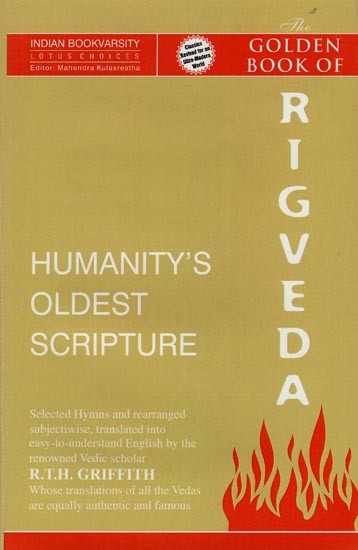
There were rishis, or seers as we now call them, thousands of years ago. They lived in ancient India and strived to explore the depths of human health and physiology through disciplined practices of meditation and spiritual life. They closely studied how life functioned and then formed Ayurveda , a complex and comprehensive system of medicine and wisdom. For a thousand years, the intricacies of this system were passed down orally from teacher to student until being written down in what are now some of the world's oldest known scriptures, the four Vedas : Rig Veda (1500-1200 BC), Yajur Veda, Sama Veda, and Atharva Veda (1200-1000 BCE). Since everything we watch, eat, drink, breathe, think about, and put on our bodies is thought to have an impact on us according to Ayurveda, as many of you are undoubtedly already familiar with, the Vedas addressed every aspect of human life. There are sections on politics, health and medical procedures, astrology, spirituality, art, and human behavio...

What Are the Different Types of Vedas and How to Understand Them: All You Need to Know

Image
The foundation of Hinduism lies in its texts and scriptures which are brimming with knowledge about yogic traditions and practices as well as spiritual wisdom. Vedas are the most important of these scriptures and are revered as the greatest source of religious authority for all Hindus across the globe. Considered to be the oldest religious texts in the world, the principles and philosophical tenets laid out in the Vedas have been regulating the social, legal, domestic, and religious practices of Hindus for centuries. How to Understanding The Structure Of Vedas The Vedas began as compositions in the form of poems and hymns that were passed on across generations orally. It was only around 3000 years ago that the Vedas were written in Sanskrit for the first time. The vast extent of knowledge contained in the Vedas makes it difficult for any single human being to learn and comprehend it all at once. Hence to make things easier, the texts were divided into four parts by Saint Ved Vyasa. ...

Understanding Hinduism through Hindu Sacred Texts

Image
Hinduism is unlike any religion practiced across the globe and is known for its vast oral traditions and visual imagery that have been an integral part of its origin and development. Another important defining factor of Hinduism is its collection of several sacred texts and scriptures. The sacred texts in Hinduism offer both spiritual guidance and practical advice. These sacred texts provide a wonderfully varied and constantly enriching path for followers of Hinduism to reach the truth. This has resulted in creating a great diversity of beliefs and practices that have played a vital role in ensuring that Hinduism continues to thrive as a religion even after a millennium.  Formats of Hindu Sacred Texts The sacred texts of Hindus are written in two main formats, namely Shruti, which means something that is heard, and Smriti, which mean memorizing. The Shruti texts are believed to have been divinely inspired as they were heard by the sages who spent long years in isolation. These s...

Books On Hindu Mythology And Puranas

Image
Puranas are religious texts written in Sanskrit that were passed down orally for centuries before being written from the 2nd century. They are part of the sacred literature of the Hindu faith that also comprise of the   Vedas , Brahmanas, Aryayankas,   Upanishads , and the great epics. They are part of the sacred literature of the Hindu religion, which also consists of the Vedas, Brahmins, Aryankas, Upanishads and great epics. The earliest forms of Hindu worship focused on ritual yagna, or Vedic sacrifices. The  Puranas  have the Vedic spirit and were written to inform the thoughts contained in the Vedas. They are not intended for scholars, but for ordinary people who can barely understand the higher philosophy of the Vedas. The Puranas are very important to Indian history. The greatest contribution of the Puranas to mankind is the knowledge it contains, such as astronomy, medicine, history and many other subjects. The Narasimha-Puranam (Text in Devanagari with Trans...