Posts

Showing posts with the label goddess durga

Goddess Durga in Indian Art: Forms, Symbols & Stories

Image
Goddess Durga holds a central place in Indian art, where religious belief, mythology, and artistic expression come together. She appears in temple sculptures, bronze statues, paintings, manuscripts, and contemporary artwork across different regions of India. Although her appearance changes according to local traditions, Durga is commonly shown as a powerful goddess with multiple arms, divine weapons, and a lion or tiger as her vehicle. Her images often represent the victory of dharma over destructive forces and the protective power of Shakti. 1. Durga as Mahishasuramardini One of the most famous artistic forms of Durga is Mahishasuramardini, the slayer of the buffalo demon Mahishasura. Artists commonly portray her standing or riding upon a lion while attacking the demon. This image became especially important in Indian temple sculpture and represents the triumph of divine power over destructive forces. The Devi Mahatmya provides the textual foundation for this form. 2. Durga’s Multiple...

Magh Navratri 2026: Dancing with Divine Energy

Image
Durga Mata Magh is a sacred pause in the Hindu ritual calendar, a time when the subtle presence of Shakti is believed to flow gently yet powerfully through the world. Observed during the bright fortnight of the lunar month of Magha, this Navratri carries a quiet intensity that is different from the more widely celebrated Sharad Navratri. It is less about grandeur and more about inner alignment, discipline, and awakening. In 2026, Magh Navratri invites devotees to turn inward, to listen, to refine, and to move in harmony with divine energy through devotion and conscious living. Sacred Flame Of Durga During Magh Navratri, the Divine Mother is worshipped in her various forms, each representing a layer of spiritual strength and grace. The nine nights are seen as a sacred rhythm where the seeker gradually sheds inertia and moves toward clarity. Homes and temples resonate with chants, lamps are lit at dawn and dusk, and the atmosphere becomes charged with prayer and intention. The cold seaso...

Where Shakti Dances: The Forgotten Yoginis of Power

Image
 In the quiet spaces of ancient India, beyond grand temples and familiar gods, there existed a sacred sisterhood known as the Yoginis. They were not gentle divinities of comfort but powerful embodiments of transformation, mystery, and inner awakening. The Yoginis belonged to an older spiritual vision where the divine feminine was raw, untamed, and deeply connected to the forces of nature and the human soul. To encounter the Yoginis was not to seek blessings alone but to face truth, fear, and liberation. The Yoginis are most often described as a group of sixty-four, each representing a distinct cosmic energy. Some embodied fierce aspects of time and death, while others governed healing, desire, wisdom, or hidden knowledge. Together they formed a complete circle of power, symbolising the totality of existence. Their worship emerged from Tantric traditions, where spiritual growth was achieved not by renunciation of the world but by deep engagement with its energies. Through ritual, m...

Eternal Shakti The Sacred Glory of Goddess Parvati

Image
In the realm where divinity and devotion meet, Goddess Parvati stands as the eternal symbol of love, strength, and transformation. She is not merely the consort of Lord Shiva but the pulse of creation itself, the boundless energy that sustains and purifies the universe. Her story unfolds like a divine fairy tale filled with courage, compassion, and cosmic purpose. 1. Durga The Warrior Mother Durga       When evil spread across the worlds and the gods trembled before the demon Mahishasura, Parvati transformed into Durga, the mighty warrior goddess. Riding a lion and holding celestial weapons, she fought for truth and restored the balance of righteousness. Durga symbolizes inner strength and the courage that awakens when one stands for justice. Her victory teaches that divine power arises from purity of heart and fearless faith.                                         ...

Divine Feminine Energy: The Sacred Presence of Hindu Goddesses in Art and Worship‬

Image
Divine Feminine Energy: The Sacred Presence of Hindu Goddesses in Art and Worship‬ A Hindu Goddess statue isn’t just an artistic object it’s a sacred companion on your spiritual journey. Authentic, handcrafted idols made of brass, bronze, or marble capture not just the form but the divine essence of the deity. Whether you seek Lakshmi’s blessings for prosperity , Saraswati’s guidance for clarity , or Kali’s protection from negativity , choose a statue crafted by traditional artisans who understand sacred proportions and symbolism. Vastu Guidelines: Best Placement for Goddess Statues According to Vastu Shastra , correct placement amplifies the energy of the deity and harmonizes the environment: Lakshmi : Place facing east or northeast , ideally near the entrance or in your prayer room to attract abundance. Saraswati : Keep in the study or workspace , facing east , to promote wisdom and concentration. Durga or Parvati : Position in the living room or near the main door , invit...

Ashtabhujadharini Goddess Kali: The Eight-Armed Divine Protector

Image
Ashtabhujadharini Goddess Kali is a powerful and revered form of the Hindu goddess Kali, known for her eight arms, each holding a symbolic weapon. The name "Ashtabhujadharini" literally means "the bearer of eight arms." This fierce form of Kali embodies ultimate strength, protection, and the ability to destroy all forms of evil, making her a central figure in Shakti worship and Tantric traditions. Who is Ashtabhujadharini Kali? Goddess Kali is celebrated as the goddess of time, destruction, and transformation. She represents both the end and the beginning, signifying that destruction is necessary for rebirth and new creation. In her Ashtabhuja (eight-armed) form, Kali is even more formidable, symbolizing her readiness to combat multiple threats at once and her capacity to protect her devotees from all directions. Each of her eight hands holds a different weapon or symbol, such as the conch, chakra (discus), mace, Aquarius, pestle, curb, loop, and thunderbolt, each r...

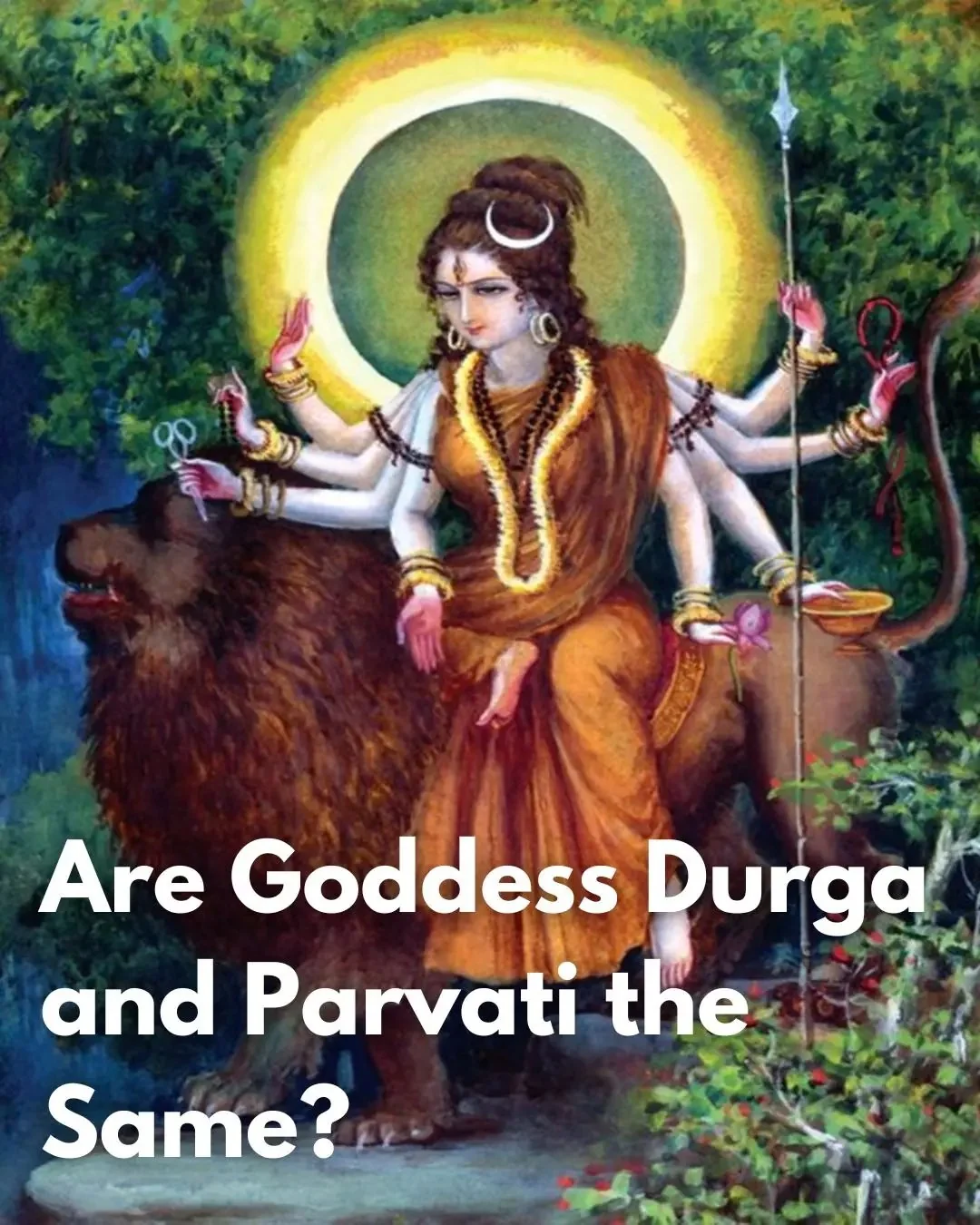
Are Goddess Durga and Parvati the Same?

Image
This is an article about the Hindu goddesses Durga and Parvati. It discusses their relationship and how they are viewed in Hinduism. Durga and Parvati are often seen as different aspects of the same divine feminine energy. Durga is the warrior goddess, while Parvati is the wife of Shiva. The two goddesses are worshipped in different ways, with festivals and rituals dedicated to each. Some popular mantras for Durga and Parvati are also provided. The article also discusses the nine forms of Durga, celebrated during the Navaratri festival. The article concludes by discussing other Hindu goddesses, such as Lakshmi and Yamuna. Sources and related content: https://www.exoticindiaart.com/article/are-goddess-durga-and-parvati-the-same/