Posts

Showing posts with the label Hindu Gods

Indra: The Thunder God and His Greatest Battles

Image
Lord Indra, the king of the Devas, occupies an important position in Vedic and later Hindu literature. He is known as a powerful warrior, the wielder of the Vajra, and the slayer of Vritra. However, later Hindu texts also describe several situations in which Indra comes into conflict with powerful sages. These stories are usually connected with tapas, or intense spiritual austerities. According to these traditions, a sage who performed severe penance could accumulate extraordinary spiritual power and receive powerful boons. Indra sometimes feared that such power might disturb the balance of the celestial world. As a result, some stories describe him attempting to interrupt or test the austerities of these sages. 1. Indra and Vishvamitra The story of Vishvamitra is one of the best-known examples of Indra’s concern about a sage’s spiritual power. Vishvamitra was originally a king who later turned toward intense austerities after his encounter with the sage Vashishtha. His prolonged tapas...

Nanda Devi Raj Jat Yatra: History, Legends, Rituals & Significance

Image
The Nanda Devi Raj Jat Yatra is one of the most significant Himalayan pilgrimages of Uttarakhand. Often called the “Himalayan Mahakumbh,” this sacred journey is dedicated to Goddess Nanda, who is deeply revered by the people of Garhwal and Kumaon. Held traditionally once every twelve years, the yatra brings together mythology, ancient customs, devotional songs, rituals, and a challenging journey through the Himalayan landscape. More than a pilgrimage, it represents the cultural and spiritual heritage of Uttarakhand. 1. History of Nanda Devi Raj Jat Yatra The tradition of the Raj Jat is believed to have continued for centuries through the communities of Uttarakhand. The pilgrimage is traditionally associated with Nauti village in Chamoli district, which serves as an important starting point. The yatra brings together devotees from different Himalayan villages who participate in the sacred procession and preserve customs passed down through generations. 2. The Legend of Goddess Nanda Nan...

The Twelve Lights That Illuminate the Path to Shiva

Image
The Holiest Forms of Lord Shiva The 12 Jyotirlingas are among the most sacred shrines dedicated to Lord Shiva and hold immense significance in Hinduism. The word "Jyotirlinga" comes from the Sanskrit words jyoti (divine light) and linga (the symbolic form of Lord Shiva), meaning the "Linga of Eternal Divine Light." According to the Shiva Purana , the Jyotirlingas originated when Lord Shiva manifested as an infinite pillar of light to demonstrate His boundless nature before Lord Brahma and Lord Vishnu. Each Jyotirlinga represents a unique aspect of Shiva's divine power, and visiting these sacred shrines is believed to purify the soul and bring devotees closer to moksha (liberation). 1. Somnath (Gujarat) Known as the first Jyotirlinga, Somnath is associated with the Moon God (Chandra), who worshipped Lord Shiva here to overcome a curse. It symbolizes healing, renewal, and the victory of faith over adversity. 2. Mallikarjuna (Andhra Pradesh) Located on Srisail...

eturning the Thirumangai Alvar Bronze: A Temple Treasure Reclaimed

Image
Across South India, temple bronzes were created not merely as art but as living embodiments of devotion. Crafted according to the Shilpa Shastras , these sculptures followed precise proportions, gestures, and iconographic rules, ensuring that each image could serve as a conduit for divine presence. Once installed in a temple, the ritual of prana pratishtha consecrated the bronze, transforming it from a metal object into a sacred medium through which devotees could encounter gods or saintly figures. Over time, these icons became central to the spiritual and cultural life of their communities. A 16th-century bronze of Thirumangai Alvar , long housed at the Ashmolean Museum , has now been repatriated to India. Archival photographs and provenance research traced its origin to the Soundararaja Perumal Temple near Kumbakonam, Tamil Nadu. Acquired by the museum in 1967 through Sotheby’s, the sculpture had been separated from its temple context for decades. The repatriation followed careful ...

Where Shakti Dances: The Forgotten Yoginis of Power

Image
 In the quiet spaces of ancient India, beyond grand temples and familiar gods, there existed a sacred sisterhood known as the Yoginis. They were not gentle divinities of comfort but powerful embodiments of transformation, mystery, and inner awakening. The Yoginis belonged to an older spiritual vision where the divine feminine was raw, untamed, and deeply connected to the forces of nature and the human soul. To encounter the Yoginis was not to seek blessings alone but to face truth, fear, and liberation. The Yoginis are most often described as a group of sixty-four, each representing a distinct cosmic energy. Some embodied fierce aspects of time and death, while others governed healing, desire, wisdom, or hidden knowledge. Together they formed a complete circle of power, symbolising the totality of existence. Their worship emerged from Tantric traditions, where spiritual growth was achieved not by renunciation of the world but by deep engagement with its energies. Through ritual, m...
Image
Goddess Kali , the fierce yet compassionate Divine Mother, reveals herself in many sacred forms across India, each shaped by the land, language, and spiritual temperament of her devotees. Though her essence remains one eternal Shakti , regional traditions allow different aspects of her divine nature to shine, creating a rich tapestry of worship that spans Odisha, Bengal, Assam, and South India. Goddess Kali In Bengal , Kali is worshipped as the intimate Mother who walks beside her children. She is fierce in form yet overflowing with tenderness. Devotees speak to her as Ma, laugh with her, and cry before her, knowing that her sword cuts ignorance while her grace protects the vulnerable. Here, Kali is both destroyer of ego and loving guardian, celebrated through poetry, festivals, and heartfelt devotion. In Odisha , Kali carries a deeply ritualistic and mystical presence. Her worship is closely tied to Tantric traditions and temple practices that emphasize discipline, mantra, and inner...

From Nobility to Nirvana: The Life of Buddha

Image
Once upon a time, in the ancient kingdom of Lumbini, a prince was born whose life would change the course of human thought forever. This prince was Siddhartha Gautama, later known as Buddha, the awakened one. From the very beginning, his life was marked by extraordinary signs. Wise sages predicted that he would either become a great king or a supreme spiritual guide. His father, wishing to see him rule the kingdom, surrounded Siddhartha with every luxury and shielded him from the sorrows of the world. He grew up in palaces filled with beauty, learning, and pleasure. Lord Buddha in Dhyana Mudra Lord Buddha Despite this, Siddhartha’s heart longed for understanding beyond comfort. One day, when he ventured outside the palace, he encountered scenes that would change his life. He saw an old man, a sick man, a dead body, and a wandering ascetic. For the first time, he understood that life is not only joy but also suffering. The reality of aging, sickness, and death stirred a deep longing wit...

Goddess Lakshmi The Gentle Radiance That Guides Every Home

Image
Queen of the Golden Lotus Goddess Lakshmi Goddess Lakshmi is the radiant mother of prosperity and the gentle heart of abundance. Her presence is seen as a warm light that brings peace, growth, and harmony to every life she touches. In sacred stories, she appears with a calm smile and a glowing aura, seated on a lotus that rises above the waters of creation. This lotus is not just a flower. It is a symbol of purity and strength. It teaches that true fortune blooms even when life is filled with challenges. Goddess Lakshmi From ancient times, people have looked to Goddess Lakshmi as the guide who helps them rise from fear to confidence and from struggle to stability. She is not fortunate that comes by chance. She is fortunate that she grows through truth, effort, and a calm heart. Her blessings show that wealth is not only money. It is also wisdom, courage, love, and a clear mind. One of the most loved stories about Goddess Lakshmi comes from the great event called Samudra Manthan. When ...

Prabhavali Meaning & Symbolism: The Sacred Halo Behind Hindu Deities

Image
  Prabhavali Meaning & Symbolism: The Sacred Halo Behind Hindu Deities A prabhavali is the sacred halo arch placed behind Hindu deities, symbolising divine radiance, spiritual energy, and celestial presence. In classical Indian iconography and Shilpa Shastra traditions, it represents the prabha —the luminous aura believed to emanate from the deity. By separating the murti from the surrounding space, the prabhavali creates depth, focus, and a sense of elevated sanctity. Crafted in brass, bronze, wood, or stone, it amplifies the glow of lamps during worship and transforms the visual atmosphere of both temples and home shrines.

Eternal Shakti The Sacred Glory of Goddess Parvati

Image
In the realm where divinity and devotion meet, Goddess Parvati stands as the eternal symbol of love, strength, and transformation. She is not merely the consort of Lord Shiva but the pulse of creation itself, the boundless energy that sustains and purifies the universe. Her story unfolds like a divine fairy tale filled with courage, compassion, and cosmic purpose. 1. Durga The Warrior Mother Durga       When evil spread across the worlds and the gods trembled before the demon Mahishasura, Parvati transformed into Durga, the mighty warrior goddess. Riding a lion and holding celestial weapons, she fought for truth and restored the balance of righteousness. Durga symbolizes inner strength and the courage that awakens when one stands for justice. Her victory teaches that divine power arises from purity of heart and fearless faith.                                         ...

Ashtabhujadharini Goddess Kali: The Eight-Armed Divine Protector

Image
Ashtabhujadharini Goddess Kali is a powerful and revered form of the Hindu goddess Kali, known for her eight arms, each holding a symbolic weapon. The name "Ashtabhujadharini" literally means "the bearer of eight arms." This fierce form of Kali embodies ultimate strength, protection, and the ability to destroy all forms of evil, making her a central figure in Shakti worship and Tantric traditions. Who is Ashtabhujadharini Kali? Goddess Kali is celebrated as the goddess of time, destruction, and transformation. She represents both the end and the beginning, signifying that destruction is necessary for rebirth and new creation. In her Ashtabhuja (eight-armed) form, Kali is even more formidable, symbolizing her readiness to combat multiple threats at once and her capacity to protect her devotees from all directions. Each of her eight hands holds a different weapon or symbol, such as the conch, chakra (discus), mace, Aquarius, pestle, curb, loop, and thunderbolt, each r...

Mahavishnu - Understanding the Supreme Preserver of the Universe

Image
Mahavishnu, often simply called Vishnu, is one of the principal deities in Hinduism and is revered as the Supreme Preserver and Protector of the universe. He is part of the Hindu Trimurti, alongside Brahma the Creator and Shiva the Destroyer. Mahavishnu’s role is to maintain cosmic order (dharma), protect the good, and restore balance whenever evil threatens the world. Who is Mahavishnu? The name Mahavishnu means “Great Vishnu,” emphasizing his supreme status among gods. He is often depicted as a calm, blue-skinned deity with four arms, holding a conch (shankha), discus (chakra), mace (kaumodaki), and lotus (padma). These symbols represent his divine powers and responsibilities. Mahavishnu is believed to incarnate on earth in various forms, called avatars, to save humanity from evil and guide them back to righteousness. The most famous avatars include Lord Rama and Lord Krishna , whose stories are central to Hindu epics like the Ramayana and Mahabharata. Importance of Mahavishnu in Hi...

Shiva Ratri Vrata Mahatmya : The Glory of Fasting and the Method of Shivaratri Puja as Told by Lord Shiva

Image
   The article "Shiva Ratri Vrata Mahatmya: The Glory of Fasting and the Method of Shivaratri Puja as Told by Lord Shiva" emphasizes the significance of observing the Maha Shivaratri fast and performing the associated rituals. It details the prescribed methods of fasting and conducting the puja, as conveyed by Lord Shiva himself. The article outlines the steps for devotees to properly observe the fast and perform the puja to honor Lord Shiva during this auspicious occasion. Source and related content: https://www.exoticindiaart.com/article/shiva-ratri-vrata-mahatmya-fasting-and-the-method-of-shivaratri-puja-as-told-by-lord-shiva/

Rama Raksha Strotram: Sri Rama’s Eternal Sheild For the Devotee

Image
This is an article about Rama Raksha Strotram. It discusses the Rama Raksha Strotram, a hymn dedicated to the Hindu god Sri Rama. The Rama Raksha Strotram was written by a sage named Budh Kaushik Rishi. It is written in the Padma Purana. It is recited by the devotee regularly or on special occasions to gain blessings and pay respect to the god or goddess who is addressed in the Stotra. Sources and related content: https://www.exoticindiaart.com/article/rama-raksha-strotram/

Who is Meldi Maa?

Image
  This is an article about Meldi Maa, a Hindu goddess. It discusses her legend, her iconography, and her temples. Meldi Maa is a local, folk goddess of Gujarat, mainly worshipped in Saurashtra, western Gujarat, as the protector of farmlands and peoples. She is believed to have been created by dirt from the hands of Goddess Uma. She is often depicted riding a goat with eight hands. Devotees seek her blessings for success in their travels, especially to the United States. The article also mentions that Meldi Maa is a popular subject in Mata ni Pachedi, a Gujarati folk art form. Sources and related content: https://www.exoticindiaart.com/article/who-is-meldi-maa/

Pattachitra: An Ancient Folk Art that Reflects the Ethos of India

Image
  This is a blog about Pattachitra paintings. It discusses the history of Pattachitra paintings, techniques, and styles of Pattachitra and answers some of the commonly asked questions related to this unique folk art from Eastern India. Pattachitra paintings are a type of scroll painting that originated in the 8th century AD. The term Pattachitra is derived from the Sanskrit words patta, which means canvas, and Chitra, which means painting. Pattachitra paintings are typically made with natural colors and depict Hindu deities, mythological stories, and folklore. Pattachitra paintings are an important part of Odia culture and are often used in religious ceremonies. Sources and related content: https://www.exoticindiaart.com/blog/pattachitra-an-ancient-folk-art-that-reflects-the-ethos-of-india/

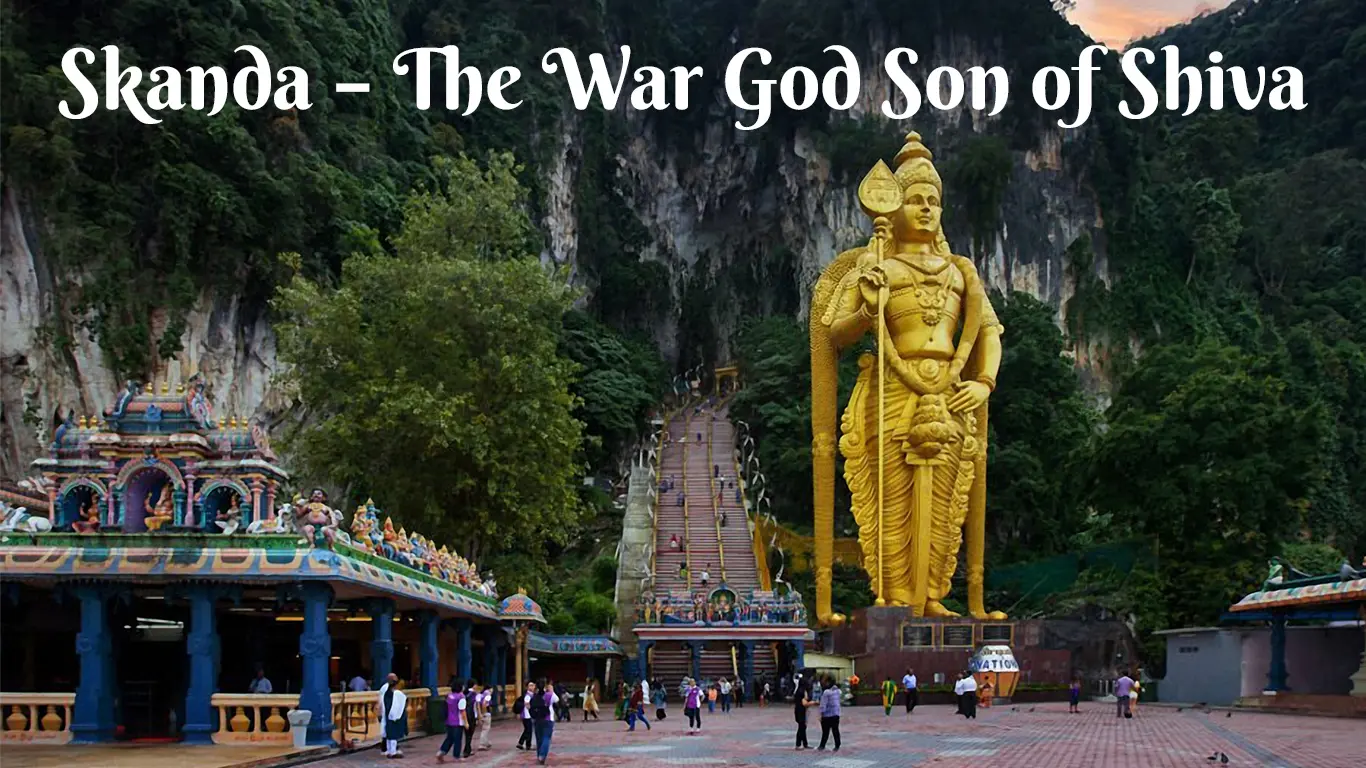
Skanda – The War God Son of Shiva

Image
This is a blog about Skanda, the Hindu god of war. It discusses his history, iconography, and stories. Skanda is the son of Shiva and Parvati. He is known for his battle with the demon Tarakasura. He is also associated with wisdom and is worshipped for protection and bravery. His most popular icons depict him as a six-headed god. He is often shown with his wives Devasena and Valli. Sources and related content: Skanda – The War God Son of Shiva - Exotic India Art www.exoticindiaart.com